
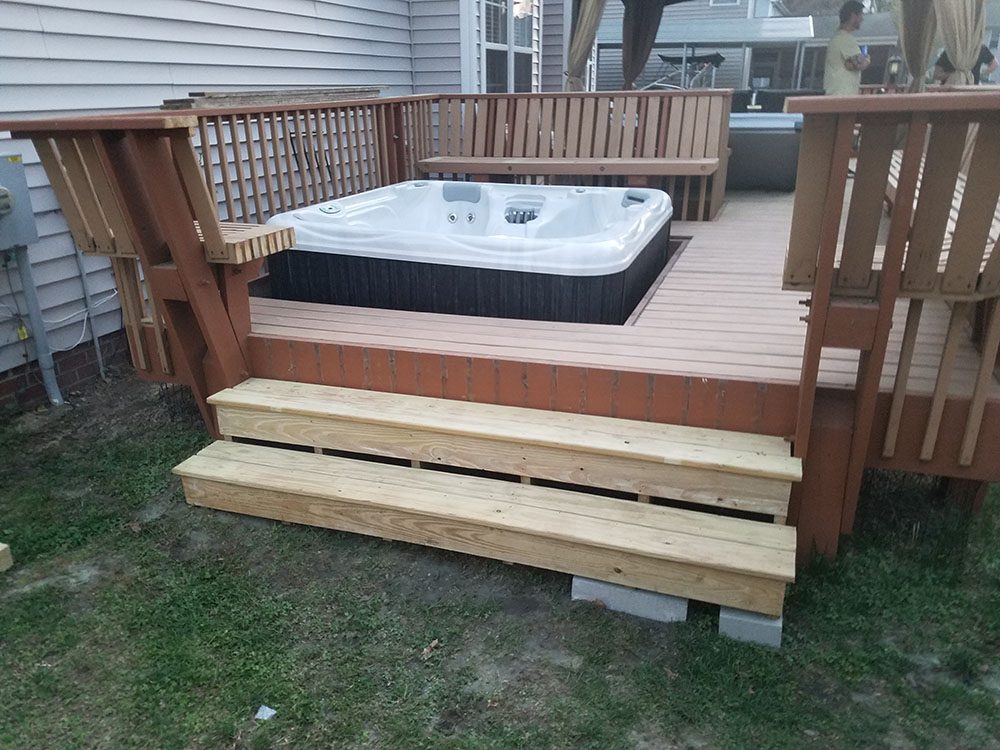
Search this exact phrase, and most of what comes back isn’t actually about the “after” part. It’s another version of how to move a hot tub: how to drain it, how to wrap it, how many people you need to lift it. That’s useful information, and we’ve covered it in our own guide on how to move a hot tub safely. But once the tub is sitting on its new pad and the truck has pulled away, a different set of questions starts, and almost nobody answers them in order. Here’s what actually needs to happen next, and roughly when.
Give It Time to Settle Before You Do Anything Else
A hot tub that just traveled, even a few hundred feet across a yard, has been tilted, jostled, and set down at angles it wasn’t designed to sit at for very long. Plumbing unions, cabinet panels, and the foam or wood base under the shell all shift slightly during transport. Before you touch a hose or a breaker, give the tub a couple of hours to simply sit in its final position. This isn’t a superstition, it’s a chance for anything that shifted to settle back into place and for you to do a calm visual walk-around before adding the weight and pressure of water.
Inspect Before You Fill
Once it’s settled, walk the tub before you fill it. Check the cabinet panels for cracks or gaps that opened up during the move, look at the visible plumbing unions under the skirt for anything that looks loose or shifted, and check the pillows, jets, and control panel for anything that came loose in transit. This is also the moment to confirm the tub is sitting level. Even a small lean, easy to miss with an empty shell, becomes an uneven waterline once thousands of pounds of water are added, and it puts ongoing stress on the shell and plumbing that wasn’t there before the move.
Re-Leveling and Reconnecting the Electrical
Most hot tubs run on a dedicated 240-volt circuit protected by a ground-fault circuit interrupter, and that connection should never be treated as a simple plug-and-go step after a move, even if the tub was on the same type of circuit at its old location. The U.S. Consumer Product Safety Commission has specifically flagged pool, spa, and hot tub electrical connections as a serious shock and electrocution risk when GFCI protection isn’t properly installed or verified. If the tub moved to a new pad, deck, or property, have a qualified electrician confirm the GFCI breaker and disconnect are correctly installed and functioning before power is restored, rather than assuming the old setup will simply work in the new spot.
Filling and Priming the Pumps the Right Way
This is the step that causes the most avoidable damage after a move, and it’s rarely mentioned. Fill the tub with a garden hose before restoring power, and keep filling until the water level is above the highest jet. If the pumps are switched on before the plumbing is fully primed with water, they can run dry, even briefly, which is enough to damage a seal or burn out a pump that survived the move itself without a scratch. Once the tub is filled to the proper level, most pumps need to be manually primed per the manufacturer’s instructions before the system is powered on for the first time in its new location.
Starting Fresh Water Chemistry From Scratch
Treat this as a full startup, not a top-off. Test and balance total alkalinity first, then pH, then add your sanitizer. The CDC recommends keeping hot tub water at a pH between 7.2 and 7.8 with an adequate free chlorine or bromine level, and starting from a completely fresh fill is actually the easiest time to get those numbers right, since you’re not correcting around whatever was already in the water. Give the sanitizer time to circulate and stabilize before testing again rather than adding more on top of a reading that hasn’t had time to settle.
The Wait Before You Get In
Between heating a full tub from tap temperature and letting fresh sanitizer stabilize, plan on a wait of roughly 24 to 48 hours after fill before the first soak, longer if the tub is heating from cold groundwater temperature in the winter months. Trying to shortcut this by getting in while the water is still climbing toward temperature and the chemistry hasn’t equalized isn’t dangerous so much as it’s simply premature, and it makes that first read on water balance harder to trust.
Watch for “Settling Leaks” in the First Week
This is the detail most guides skip entirely, and it’s one of the most common calls we get after a move. A union or fitting can seem perfectly tight right after a move, hold for a day or two under normal pressure, and then start weeping slightly once the tub has gone through a full heat cycle and the plumbing has expanded and contracted for the first time in its new spot. It’s not a sign of a bad move, it’s just how PVC fittings behave after being disturbed and then thermally cycled. Check under the cabinet at the unions daily for the first week, not just on move day, and tighten or call for service at the first sign of moisture rather than waiting for a real leak to develop.
What If Something’s Not Right After the Move
Occasionally, a pump, heater, or control panel that worked fine before the move develops an issue afterward, whether from the vibration of transport or simply from being powered back on after sitting idle. If that happens, don’t keep running the system hoping it resolves itself. Our team handles service and repair work in addition to moves, and troubleshooting an issue that shows up right after relocation is a routine part of what we do.
How Hot Tub Taxi Handles the Whole Process
We’ve been moving hot tubs since 1994, and the post-move setup gets the same attention as the move itself: leveling, electrical coordination with your electrician, fill and priming guidance, and startup water chemistry advice, all included as part of the job rather than left for you to figure out afterward. If you’re planning a move, or you just had one done elsewhere and something doesn’t feel right, our hot tub movers in Raleigh and Charlotte team can help. Hot Tub Taxi serves NC, SC, VA, TN, GA, and FL. Call (919) 744-4579 for a free estimate.
Frequently Asked Questions
How long should a hot tub sit before you fill it after a move?
A couple of hours is generally enough to let the tub settle into its final position and to complete a visual inspection before filling. There’s no benefit to waiting significantly longer once it’s leveled and inspected.
Can you turn the power on before the tub is full of water?
No. Running the pumps before the plumbing is fully primed with water can damage seals or burn out a pump, even briefly. Always fill above the highest jet and follow the manufacturer’s priming steps before restoring power.
How soon can you use a hot tub after moving it?
Plan on roughly 24 to 48 hours after filling for the water to reach temperature and for fresh sanitizer levels to stabilize. This can take longer in cold weather.
Does a hot tub need to be releveled after every move?
Yes. Even a short move can leave a tub slightly off level on its new pad, and an uneven base puts ongoing stress on the shell and plumbing once it’s filled with water.
Is it normal for a hot tub to leak slightly after a move?
A small amount of weeping at a union or fitting in the days after a move isn’t unusual, since fittings can loosen slightly during transport and then shift again through the first heat cycle. It’s worth checking daily for the first week and addressing it early rather than ignoring it.