
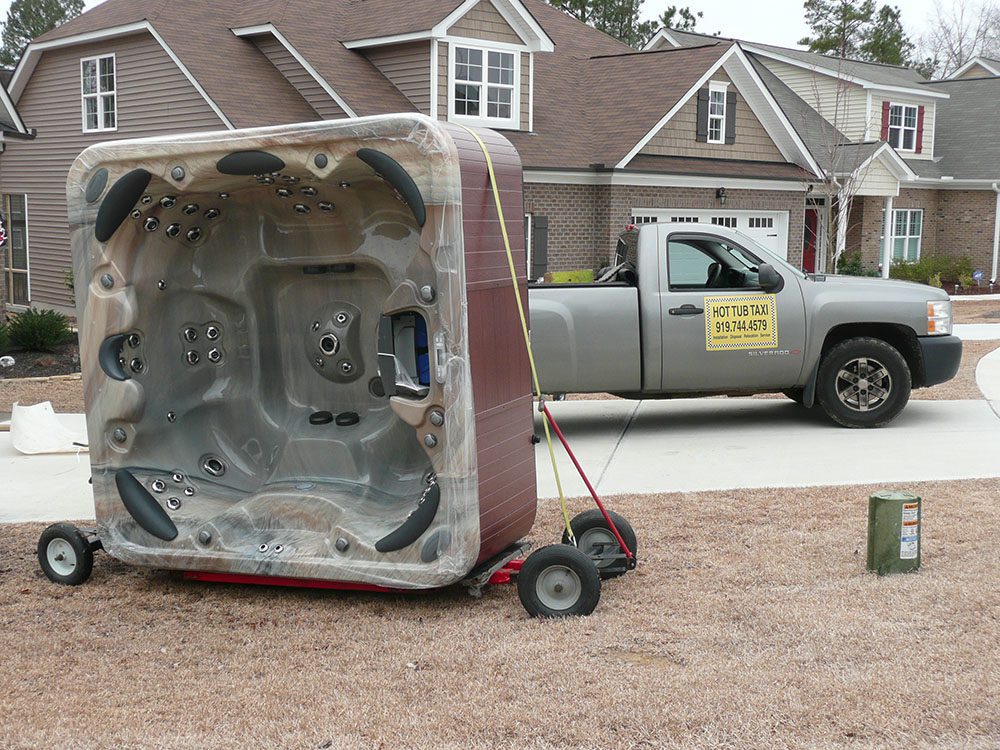
Most people who own a hot tub and are planning a move eventually ask this question, usually a few weeks before the moving date when there are already too many decisions to make. The answer is not obvious, and the articles that try to answer it tend to do one of two things: they either give a generic cost breakdown and say “it depends,” or they default to “yes, always take it because hot tubs are expensive.”
Neither is particularly useful when you are actually trying to decide. What is useful is a clear framework for thinking through the factors that actually determine whether taking the tub makes sense for your specific situation. That is what this post covers.
Why This Decision Is Harder Than It Looks
The complication is that the hot tub has value in two directions simultaneously. It has value to you as a functioning piece of equipment you enjoy and would pay to replace. It also has value as a negotiating asset in the sale of your current home, either as an included feature that makes the property more attractive or as an excluded item you retain for yourself.
Those two value streams can point in opposite directions. A hot tub that would cost $8,000 to replace might be worth more to a prospective buyer of your current home than it would cost you in moving expenses and reinstallation at the destination. Or the opposite might be true. Working out which situation you are in requires thinking through several factors that most people do not consider until they are in the middle of a move and out of time to think clearly.
Factor One: What Is the Tub Actually Worth to Move?
The starting point is the replacement cost of your specific tub, not the original purchase price. Hot tubs depreciate. A tub you paid $10,000 for seven years ago may now cost $6,000 to $8,000 to replace with an equivalent model, or less if technology has advanced and better options are available at lower prices. Check current prices for a comparable model before assuming your tub’s value justifies a complex move.
Then compare that against the all-in cost of moving: professional hot tub moving service, electrical disconnection and reconnection at both ends by a licensed electrician, any permitting required at the destination, and installation costs if the new location requires a new pad or deck modification. In most situations, professional moving alone runs several hundred dollars to over a thousand, depending on distance and site complexity, and the electrical work on both ends adds to that.
If the replacement cost of the tub significantly exceeds the all-in moving cost, the financial case for taking it is strong. If the gap is narrow, other factors matter more.
Factor Two: Does the Destination Have a Suitable Location?
This is the factor that gets skipped most often and causes the most regret. Before committing to taking the tub, confirm that the destination property has:
- A structurally adequate surface to support the tub’s filled weight, typically 3,000 to 6,000 pounds depending on size, whether that is an existing reinforced concrete pad, a structurally evaluated deck, or a location where a new pad can be poured
- Access from the street or staging area that the tub can physically fit through: gate widths, clearance heights, path gradients
- A dedicated 240V electrical circuit of the correct amperage for your specific tub, or a location where one can be installed
- Enough space for the tub to function: access panels need to be reachable for service, and the tub should have reasonable access for maintenance without being wedged into a corner
A hot tub that arrives at a destination property with no adequate pad, no electrical circuit, and an access path that requires removing a fence section is a hot tub that sits on a driveway while you figure out logistics that should have been figured out before moving day. That situation is expensive and stressful in ways that make the original decision not to leave the tub look appealing in retrospect.
Factor Three: What Happens If You Leave It?
Leaving the hot tub is not simply a default. It is a decision with its own set of considerations.
If you are selling your current home, a hot tub can be a positive feature that adds to the property’s appeal, particularly in markets where outdoor living is valued. Including it in the sale may increase the sale price or accelerate the sale. Removing it before listing may create an obligation to repair or replace the pad area, depending on the condition left behind.
If you are renting your current property or ending a lease, the situation is different: the tub typically goes with you unless a specific arrangement is made with the landlord or new tenant. A tub left behind without a formal agreement has no guaranteed value to you.
The negotiation angle is also worth considering: in some real estate transactions, the hot tub is used as a negotiating chip. A buyer who wants it may offer to pay something for it, or a seller who wants to simplify the move may include it as a concession. Either approach can make financial sense depending on where negotiations stand.
Factor Four: How Old Is the Tub and What Condition Is It In?
The age and condition of the tub affect the calculus on both sides of the decision. A seven-year-old tub in excellent condition with recently replaced components is worth moving. A twelve-year-old tub with an aging heater, original pump, and a shell that has seen better days may need significant repairs in the next two to three years, regardless of whether it moves.
Moving stresses the plumbing and shell of a hot tub in ways that can accelerate existing vulnerabilities. A tub that was developing a minor fitting leak before the move may have a more significant plumbing issue after it. This is not a reason to avoid moving a tub that is in good shape; it is a reason to have a realistic view of a tub’s remaining useful life before committing to the cost and logistics of moving it.
If the tub has not been serviced recently, having a technician inspect it before the move gives you better information for the decision and surfaces any repairs that should be addressed before transportation.
Factor Five: How Far Are You Moving?
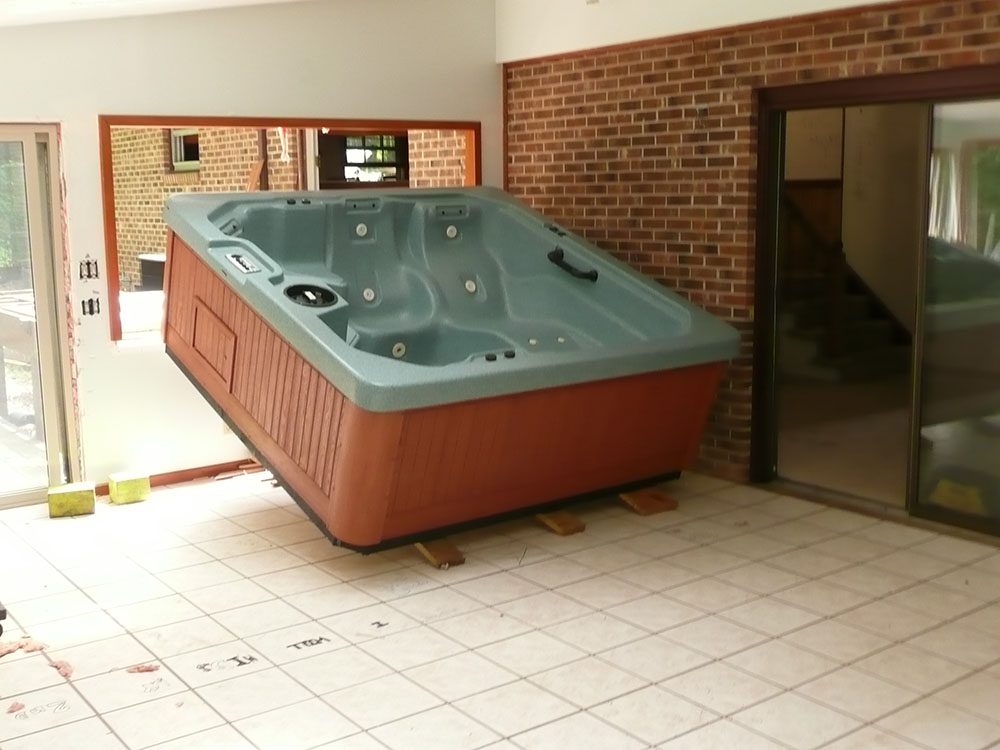
Distance affects the economics in straightforward ways. A local move of ten to thirty miles is relatively simple: the tub goes on a truck, arrives the same day, and is reinstalled at the destination. A long-distance move introduces more complexity: the tub either travels on a moving truck (which requires coordination with the mover, proper blocking and securing, and awareness that general moving companies are not hot tub specialists), or it requires a specialized hot tub transport service for the long haul.
For moves across state lines or significant distances, the logistics and cost of moving the tub may tip the decision toward selling it locally and purchasing a replacement at the destination. A tub sold and replaced locally also avoids transit risk, which is real: a tub improperly secured or handled during a long move can arrive with shell stress fractures or plumbing damage that doesn’t surface until after it is filled and running.
Making the Decision
The decision framework reduces to four questions:
- Does the replacement cost significantly exceed the all-in moving cost? If yes, the financial case for moving it is strong.
- Does the destination have, or can it realistically accommodate, an appropriate site? If no, figure that out before the move or reconsider.
- Is the tub in condition that justifies the investment of moving it? If it has meaningful remaining useful life, yes. If it is approaching end of life, the math changes.
- Does leaving it create value in the current transaction that approaches or exceeds its replacement cost? If yes, leaving it may be the better financial decision even if the tub is valuable.
If the answers to the first three questions are yes and the fourth is no, take the tub. If one or more of the first three is uncertain, resolve the uncertainty before moving day.
If You Decide to Take It: What Comes Next
Once the decision is made, the next step is logistics. The tub needs to be drained, the electrical needs to be properly disconnected by a licensed electrician, and the move itself needs to be handled by people with the right equipment: a spa dolly, rated rigging if needed, and a vehicle with a lift gate or appropriate ramp rather than manual carrying over flat terrain.
At Hot Tub Taxi, we have been moving hot tubs since 1994. The logistics questions specific to your tub and your properties, what equipment the move requires, whether the destination site is accessible, and how to handle the electrical on both ends, are all things worth talking through before the move is scheduled rather than on moving day. Our hot tub moving services are designed around that pre-move conversation: understanding your specific situation before anything gets lifted.
Call us before you commit to a direction. If the move makes sense, we can tell you what it involves and what it will cost. If complications change the calculus, it’s better to know early.
Frequently Asked Questions
Is it worth moving a hot tub to a new house?
It depends on the replacement cost of the tub, the all-in cost of moving it including electrical work at both ends, and whether the destination property can accommodate it. In most cases, if a tub is in good condition, it costs significantly more to replace than to move, and if the destination site is ready, moving it makes financial sense. Where the gap is narrow, or the destination has site complications, the answer is less clear and requires working through the specific numbers.
Can a hot tub be included in a home sale?
Yes, and this is a common option. A hot tub is typically considered personal property rather than a fixture, which means it does not automatically convey with the property sale unless specifically included in the purchase agreement. Sellers can choose to include it, exclude it, or negotiate its inclusion as part of the transaction. If you plan to take the tub, clearly exclude it in the listing and the purchase agreement before you receive offers to avoid ambiguity and potential disputes.
What is the cost of moving a hot tub?
Professional hot tub moving costs vary by distance, site complexity, and what equipment is required. A local move with straightforward site access and no significant obstacles typically runs several hundred dollars. More complex moves involving cranes, difficult access, long distances, or challenging terrain at either end cost more. Electrical disconnection and reconnection at both ends by a licensed electrician is a separate cost to factor into the total. Get a quote that accounts for both properties before you finalize your decision.
What happens to the electrical when you move a hot tub?
The existing electrical circuit at the origin property stays with the property. At the destination, a dedicated 240V GFCI-protected circuit must be in place before you can reinstall and use the tub. If one does not exist, a licensed electrician needs to install it, which requires planning and scheduling before or shortly after the move. Do not assume the destination property has suitable electrical in place without confirming it; an incompatible or absent circuit at the destination is a common cause of post-move delays.
Can a general moving company move a hot tub?
Some will attempt to include a hot tub in a general household move, but general movers are not hot tub specialists. They may not have spa dollies rated for the weight, may not understand how to tilt and maneuver a tub without stressing the shell and plumbing, and may not be equipped to handle the site-specific challenges of a hot tub move. Damage that results from an improperly handled hot tub, including shell stress fractures and plumbing joint failures, may not be covered by a general mover’s liability policy in the way they would cover standard furniture. A specialist hot tub mover is the lower-risk option for the equipment itself.