
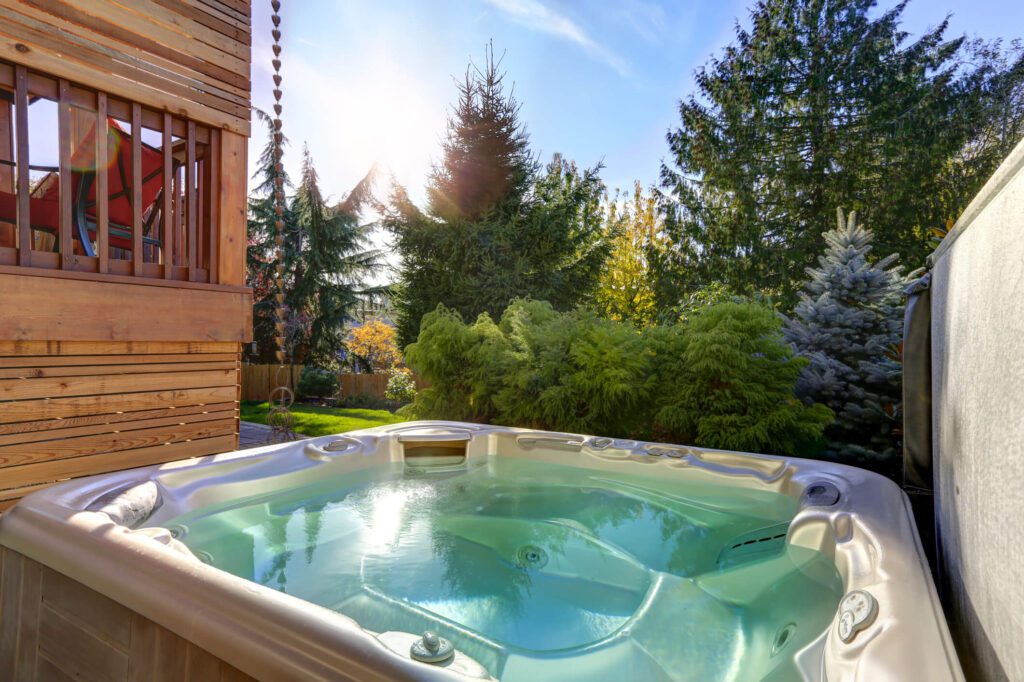
Most placement guides start with the fun part: privacy screens, surrounding decking, string lights, a view of the trees. That’s the part everyone wants to think about first, and it’s genuinely worth getting right. But after 25-plus years of moving and relocating hot tubs across the Carolinas, the conversation we most often have with homeowners isn’t about aesthetics at all. It’s about whether the spot they’ve already fallen in love with can actually hold the weight.
Before the Pretty Part: Can the Spot Actually Hold the Weight?
A filled hot tub, with water and people in it, typically weighs somewhere between 4,000 and 6,000 pounds, sometimes more for larger units. Spread across the footprint of the tub, that works out to roughly 100 pounds per square foot or higher. A standard residential deck, by contrast, is generally built to handle somewhere around 40 to 50 pounds per square foot. That gap, more than double what an ordinary deck is designed for, is the single most important thing to understand before you start picking out string lights and privacy screening.
Not sure whether your chosen spot can safely support a filled hot tub? Hot Tub Taxi helps homeowners evaluate placement and handle professional hot tub moving so the installation is structurally sound from the start.
This is why the placement ideas worth pursuing aren’t really about taste first. They’re about which locations can structurally support the tub, and which ones need reinforcement, a dedicated pad, or a different location entirely before the fun design choices even matter.
Ground Level: The Option With the Fewest Surprises
A ground-level placement on a properly prepared base remains the most straightforward option, and it’s the one we recommend most often when a yard allows for it. A reinforced concrete pad, typically poured at least 4 inches thick and extending several inches beyond the tub’s footprint on all sides, provides a stable foundation that doesn’t depend on anything else in your yard to bear the load. Pavers over a properly compacted gravel base can work as a lower-cost alternative, provided the ground beneath has been prepared to prevent shifting over time.
What makes ground-level placement appealing beyond the structural simplicity is that it sidesteps an entire category of problems. No deck framing to evaluate, no engineer to consult, no question about whether the joists beneath an existing structure were sized for this kind of load. If your yard has a relatively flat, accessible spot that isn’t directly against the house foundation, this is usually the placement idea that creates the fewest headaches later.
On a Deck: Beautiful, But Only If It’s Built For It
A deck-mounted hot tub is one of the most visually appealing placement choices, especially when it’s designed as part of the deck from the start rather than added afterward. But this is exactly where the weight question matters most, because a deck that looks perfectly sturdy for foot traffic and a few patio chairs is very often not built for a 5,000-pound concentrated load sitting in one place, day after day, for years.
If you’re considering an existing deck, the only responsible path is having it evaluated, ideally by a structural engineer or an experienced contractor, before the tub goes in. Common reinforcement approaches include doubling or tripling the floor joists beneath the tub’s footprint, adding support posts and footings, or, in some cases, pouring a concrete pad beneath the deck to carry the load independently of the deck framing. None of this is meant to discourage a deck placement; it’s meant to make sure the placement idea you fall in love with on Pinterest doesn’t turn into a structural problem two years down the road. We’ve been called in often enough to relocate a tub off a deck that started showing stress to know this is worth getting right from the beginning, rather than discovering it the hard way.
Corner and Recessed Placements: Good for Privacy, Worth a Second Look for Access
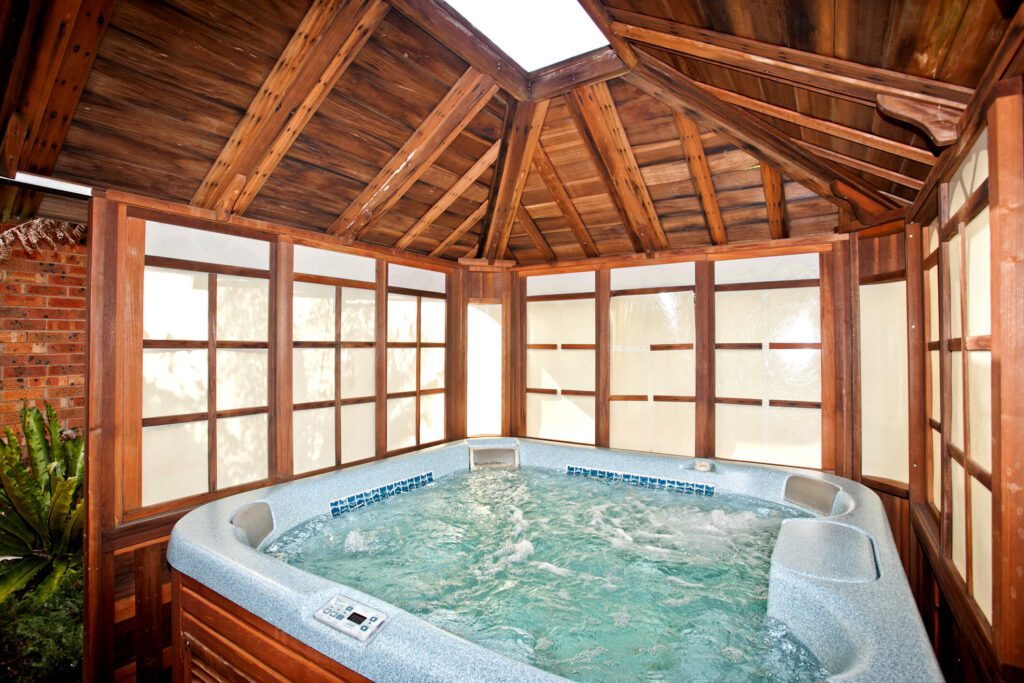
Tucking a hot tub into a corner of the yard or recessing it partially into a raised deck creates a naturally private, enclosed feel without needing much additional screening. It’s a genuinely good placement idea for privacy. The tradeoff worth thinking through ahead of time is access, both for daily use and for the day, years from now, when the tub eventually needs servicing, repair, or relocation. A corner that’s beautiful but boxed in by fencing, retaining walls, or dense landscaping on every side can turn a routine maintenance visit or future move into a significantly more complicated job than it needed to be. This doesn’t mean avoid corner placements; it means leave at least one practical access path open, even if it’s not the path you use every day.
Near the House Versus Farther Into the Yard
Placing the tub close to the house generally wins on convenience: shorter walk in cold or wet weather, easier electrical and plumbing runs, less distance from indoor amenities. Most jurisdictions also have minimum setback requirements from the structure itself, often somewhere in the five to ten foot range, primarily for electrical safety, so “right up against the house” usually isn’t an option regardless of preference.
Placing the tub farther into the yard tends to win on privacy and view, particularly if there’s a natural focal point worth orienting toward, like mature trees, a garden bed, or simply distance from neighboring sightlines. The honest tradeoff is a longer run for electrical and plumbing, which adds cost, and a longer walk on a cold winter evening, which is a small thing until it isn’t.
What to Check Before You Commit to a Spot
A few practical questions are worth answering before finalizing any placement, regardless of which general approach you’re leaning toward: Is the ground or deck structurally rated for the tub’s filled weight? Is there a GFCI-protected electrical circuit within a reasonable distance, since most hot tubs require a dedicated 240-volt circuit run by a licensed electrician? Does the location allow at least a few feet of clearance on the equipment side for maintenance access? And does your local jurisdiction require a permit, which many do for both the structural pad and the electrical work involved?
None of these questions are meant to talk you out of an ambitious placement idea. They’re meant to make sure the idea you choose is one you’ll still be happy with five years from now, rather than one that needs to be undone.
If you’re unsure whether your current or planned location is the right fit, Hot Tub Taxi can assist with safe hot tub relocation and professional placement guidance.
When the Right Answer Is Actually a Different Spot
Sometimes the most beautiful placement idea in a backyard turns out to be the wrong one once the structural and access questions are answered honestly, and the better move is relocating an existing tub to a more suitable spot rather than forcing a location that was never going to work long-term. If that’s the situation you’re in, whether you’re moving a tub to a better-supported location on the same property or relocating it entirely, our hot tub moving services page covers what that process looks like and what to expect.
For guidance on the structural side of a deck-mounted installation specifically, the National Association of Home Builders publishes general residential construction standards that are a useful starting point before bringing in a local structural engineer or contractor for a load assessment specific to your property.
You can reach us at (919) 744-4579 to talk through a move or placement question, or book an appointment online if you’re ready to get started.
Frequently Asked Questions: Hot Tub Placement
Can a hot tub go directly on grass or dirt?
No. Placing a hot tub directly on grass or unprepared dirt creates an unstable base that can shift or settle unevenly over time, which puts uneven stress on the tub’s frame and shell. A prepared, compacted base, whether concrete, pavers over compacted gravel, or a manufactured spa pad, is necessary regardless of where in the yard you place it.
How much weight does a filled hot tub actually put on a surface?
A filled hot tub, including water and the weight of people using it, commonly falls somewhere between 4,000 and 6,000 pounds, distributed across a relatively small footprint. That works out to roughly 100 pounds per square foot or more, which is significantly higher than the 40 to 50 pounds per square foot most standard residential decks are built to support.
Do I need a permit to install a hot tub?
In most jurisdictions, yes, particularly for the structural pad and the dedicated electrical circuit. Requirements vary by location, so checking with your local building department before installation is worth doing early in the planning process rather than after the tub has arrived.
How far should a hot tub be from the house?
Many local codes require a minimum setback, often in the range of five to ten feet, from structures for electrical safety. Beyond the code minimum, the right distance is really a tradeoff between convenience, since closer means shorter electrical and plumbing runs and an easier walk in bad weather, and privacy, since farther into the yard generally offers more separation from the house and neighboring sightlines.
What’s the best surface for a hot tub if I don’t want to pour concrete?
Pavers set over a properly compacted gravel base are a common and effective alternative to a poured concrete pad. The key requirement either way is a stable, level, well-compacted base; the material itself matters less than whether the ground beneath it has been properly prepared to prevent shifting over time.