
How Long Does It Take to Move a Hot Tub? Complete Time and Step-by-Step Guide
Moving a hot tub might sound like a quick job, after all, it’s just a big tub, right? But anyone who’s done it knows there’s a lot more involved than just lifting and hauling. We move 3 to 5 hot tubs every single day. Between draining hundreds of gallons of water, navigating tricky doorways, and managing heavy equipment, the process can easily stretch into several hours. If you want to save time, avoid damage, and keep everyone safe, understanding what goes into moving your hot tub is key, and that’s exactly what we’re breaking down step-by-step in this guide.
Moving a hot tub typically takes several hours, with the entire process, from draining the water to unloading at the new location, often spanning 4 to 6 hours depending on the equipment used and number of helpers. Draining alone can take 2 to 4 hours by gravity, but using a submersible pump can reduce this time significantly; thorough planning and proper tools also impact the overall duration.
Factors Influencing Moving Time
The size and weight of the hot tub are often the biggest contributors to moving time. Standard models can weigh anywhere from 500 to 1,200 pounds when empty, and many hold 300 to 500 gallons of water, which must be fully drained before any move. Larger tubs, with their bulk and heft, naturally require more careful handling and strength, thus increasing the time it takes just to maneuver them out of place.
Distance adds another layer of complexity. Moving a hot tub across a short backyard might take an hour or two with a small team, but relocating one several blocks away or across multiple flights of stairs can extend the process to half a day or more. Not only does transport time add up, but loading, unloading, and ensuring safe pathways all require deliberate pacing.
Accessibility can dramatically change the timeline. Narrow doorways, tight hallways, and staircases force movers to pause frequently, carefully tilting and repositioning the spa to avoid damage. If you don’t have clear, obstacle-free paths, no furniture blocking the way or uneven terrain, these challenges slow everything down considerably.
This is why careful planning is critical: measuring door and gate openings in advance ensures the hot tub won’t get stuck midway, saving frustration and wasted effort during the move.
The number of helpers on hand is equally important. Moving these large units without enough assistance risks injury and damage. A team of four to six people provides enough hands for lifting straps and carrying dollies while helping keep balance steady. Interestingly, each additional mover beyond two can reduce total moving time by about 15-20%, up to an ideal team size around six.
However, adding too many uncoordinated movers can cause confusion, so teamwork and clear communication remain essential.
Weather is often overlooked but plays a huge part in safety and efficiency. Wet or icy conditions make surfaces slippery and dangerous for heavy lifts. Extreme heat can exhaust movers quickly, necessitating more frequent breaks. Because of that, scheduling moves on mild days helps prevent accidents and reduces unexpected delays.
The experience level of your movers is another key factor. Professionals who specialize in hot tub moves know how to handle delicate plumbing lines, avoid resting tubs on vulnerable spots, and use equipment like ratchet straps and sturdy dollies correctly. DIY movers without this expertise will likely take longer due to caution or missteps but still can save money if well-prepared.
Hiring trained specialists is something to consider if you’re unsure about your team’s ability or equipment, it often avoids costly mistakes while saving time in the long run.
Understanding these variables sets the stage for thorough preparation, which directly impacts the efficiency and safety of your move. Next, we focus on vital actions before lifting a single step or turning on any key tool.
Essential Preparation Steps
When it comes to moving a hot tub, measure twice, move once isn’t just a saying, it’s a crucial part of your success. Before you even think about disconnecting or lifting, carefully measure every potential bottleneck along your route. Doorways, gates, narrow garden paths, all these must be wide and tall enough to accommodate the bulk of your hot tub.
A typical spa can be seven or eight feet across and over three feet tall, so leaving some extra clearance is wise. If measurements are tight, it’s better to know now and plan an alternative rather than be stuck mid-move.
But measuring alone isn’t enough; you’ll need to clear the path completely of anything that might trip you up, quite literally. This means temporarily relocating garden tools, lawn furniture, flowerpots, hoses, anything that crowds walkways or ramps.
It sounds straightforward, but easily overlooked equipment or knickknacks can force awkward stops during the move or worse, cause damage. Creating a clean, obstacle-free path allows your team to maneuver smoothly with confidence and speed.
One detail many forget until the last minute is checking whether permits or notifications are required for your move.
Depending on where you live, transporting a bulky hot tub along sidewalks or crossing streets could require approval from local authorities. Failing to secure these in advance can result in unexpected fines or work stoppages, delaying your project unnecessarily.
Reach out to city offices or homeowner associations as needed before moving day to avoid surprises.
After laying this solid foundation by measuring, clearing, and securing permissions when needed, you’re ready to take the next critical steps: disconnecting power sources and draining all water safely, tasks essential not only for efficiency but also for the safety of everyone involved in moving your hot tub.
Disconnecting and Draining the Hot Tub
First and foremost, safety should always be your top priority. Begin by turning off the electricity supplying power to the hot tub at the main electrical panel. This simple action prevents any risk of electric shock or accidental damage during the move. Many hot tubs operate on high-voltage circuits, sometimes 240 volts, which can be hazardous if mishandled. If you’re unsure about handling electrical components, hiring a licensed electrician for this step is highly recommended, it could save you from costly mistakes and ensure compliance with local codes.
Once the power is safely off, it’s time to drain the water inside. Hot tubs typically hold between 300 and 500 gallons, so fully emptying them is no small task. Using a submersible pump is the fastest and most efficient method. With a pump, you can reduce draining time to about 20-30 minutes for an average-sized tub, much faster than relying on gravity alone. Gravity drainage involves opening the drain valve and allowing water to flow out through a garden hose; this usually takes anywhere from two to four hours depending on your tub’s size and the slope of your yard.
Beyond just emptying the tub shell, don’t forget the water trapped in plumbing lines and filters. Leftover moisture in these areas can freeze if moved during colder weather or cause mold issues once relocated. To avoid this, blow out the pipes using a shop vacuum or gently remove filters and let them dry completely before packing. Cleaning filters also gives you a chance to inspect for wear or damage that might need attention once reinstalled.
Detach any removable parts such as the cover, steps, side panels, or accessories during this phase. Taking these off not only reduces overall weight but also protects delicate components from getting damaged while moving. Store these parts securely in labeled boxes or wrapped blankets, keeping everything organized will save you headaches when it’s time to set up your hot tub again.
Always double-check that your hot tub is completely drained before attempting any lifting or transport. Residual water adds unexpected weight and increases chances of spills that can cause slip hazards or ruin surfaces in your home.
Having disconnected power and emptied every last drop of water, plus safely removing attachments, you set yourself up perfectly for the next critical stages: carefully lifting and transporting your hot tub without damage or injury.
Lifting and Transporting Procedures
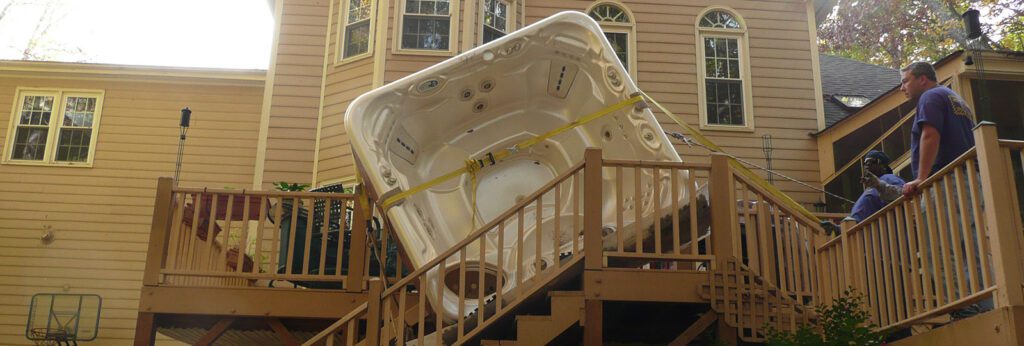
Handling a hot tub’s hefty weight, often between 400 and 900 pounds when empty, demands careful coordination and the right equipment. At least four strong adults are needed for lifting, ideally using durable lifting straps designed to spread the load across the team evenly. These straps reduce strain on individuals and help prevent injuries by encouraging proper lifting technique, lifting with the legs rather than the back being an essential safety practice often overlooked in DIY moves.
It’s not just about muscle power; planning your grip points on the tub ensures no one is caught off guard. The recommended approach places lifters strategically on each side, gripping near structural frames rather than fragile equipment housings to avoid damage. Using lifting straps here is more than convenience, it is a safeguard against accidentally bending or cracking vulnerable shells or plumbing lines inside.
Balance on Dollies
After carefully lifting, the hot tub needs to be placed onto sturdy dollies equipped with four wheels each. These dollies act as mobile platforms that support the bulk of the weight and provide controlled movement across varying surfaces. Picture this: two dollies beneath the tub, spaced precisely under its strongest points, distribute weight evenly so you don’t end up rocking or tipping as you roll.
This setup makes navigating over uneven ground or small inclines manageable without risking sudden shifts or jolts which could cause costly damages. It’s common advice among professionals to slide wooden boards underneath if outdoor surfaces are rough, ensuring smooth passage like rolling on a mini highway built for your spa.
Secured now on these dollies, moving the hot tub becomes a matter of slow, steady navigation with constant communication among movers. This minimizes risk during transport from yard to truck or across property lines alike.
Once positioned correctly, it’s vital to strap the hot tub securely inside the transport vehicle. Ratchet straps applied at multiple anchor points prevent unwanted shifting during transit, a surprise jostle can lead to cracked panels or broken jets. Padding with moving blankets between surfaces adds an extra insurance layer against scrapes or dents.
Throughout this process, pausing occasionally to recheck strap tension and tub stability is a wise practice. Even minor loosenings can turn into bigger problems once you’re on the road. Additionally, having one person act as a spotter ensures obstacles are avoided and everyone stays coordinated especially in tight spaces.
Final Thoughts on Safety
Remember: attempting this alone drastically increases injury risks and potential property damage. Professional movers specialize in such heavy lifts because they understand how to maintain balance, use mechanical aids wisely, and execute efficient transports without rushing.
Choosing to invest in proper tools like high-quality dollies, lifting straps rated beyond your spa’s weight capacity (typically 1.5 times greater is advisable), and adequate padding will pay dividends in safety and peace of mind during this demanding task.
Employing these steps methodically not only preserves your hot tub’s condition but ensures everyone involved goes home unscathed after what can otherwise be an exhausting job.
Respecting the size and delicacy of what you’re moving changes this from an overwhelming chore into a smooth operation.
With your hot tub safely transported and secured, attention naturally shifts toward restoring its comfort and functionality. Next, we explore how to properly reconnect utilities and refill your spa to get it ready for relaxing sessions once again.
Reconnecting and Refilling
Reconnecting your hot tub’s electrical system is not a task to be rushed or taken lightly. With most residential hot tubs requiring a 240-volt power connection, safety must be the highest priority. Even if you’re somewhat handy with electrical work, hiring a licensed electrician is strongly advised to ensure that the wiring complies with local codes and that everything is properly grounded. This step not only protects you from potential hazards but also preserves the manufacturer’s warranty, which often mandates professional installation after a move.
Typically, reconnecting can take between 30 to 60 minutes, depending on the complexity of your spa’s electrical setup and whether components such as control panels or heaters need readjustment.
Once the power is reconnected safely, turning your attention to refilling the hot tub becomes essential. The process might seem as simple as turning on a garden hose, but there are subtleties that make all the difference.
First, make sure all drain valves and any open plumbing ports are securely closed before starting. This precaution prevents unexpected leaks or water loss during filling, which can be frustrating and potentially damaging to internal components.
Then, attach the hose to a reliable water source and begin filling. Hot tubs usually hold between 300 to 500 gallons of water; at a flow rate of about 9 to 17 gallons per minute from a standard garden hose, this can take anywhere from 45 minutes to 90 minutes.
Watching over the fill process keenly allows you to spot any leaks or irregularities in real-time so you can stop or adjust as needed.
In parallel with refilling, keep an eye on your hot tub’s various fittings and seals for leaks, a critical step often overlooked in the eagerness to get back into the warm water. A slow leak can compromise efficiency later or cause structural issues over time.
“Slow down and be methodical as you refill: it’s tempting to rush this final step, but patience here saves headaches later.”
After filling, don’t forget that water chemistry needs special attention before use. Balancing pH levels and sanitizing properly can take another 15 to 30 minutes but is essential for safe and enjoyable soaking.
Following that, heating your tub back up to an ideal temperature, typically between 100°F and 104°F (38°C to 40°C), usually takes between 6 to 12 hours depending on your heater’s power and ambient conditions.
Therefore, plan accordingly so you’re not caught off guard waiting overnight for your spa’s temperature to reach a comfortable level.
Having covered these critical reconnection steps, it’s useful to consider the specialized tools and equipment that make relocating and setting up a hot tub smoother and safer for everyone involved.
Necessary Tools and Equipment
Moving a hot tub isn’t something you want to improvise on. The sheer size, often 7-8 feet across, and weight that can range from roughly 500 to over 1,000 pounds demand specialized gear to avoid injury or costly damage. You need equipment not just to handle the weight but also to protect delicate components like pumps, heaters, and cabinetry during transit.
For example, those heavy-duty furniture dollies rated for at least 1,000 pounds each are absolute lifesavers when it comes to rolling the hot tub over smooth surfaces. Paired with lifting straps designed to distribute the load evenly across your team’s bodies, these make all the difference by reducing strain and increasing control. Without them, your move quickly becomes a dangerous game of risk versus reward.
| Tool/Equipment | Cost (Per Day) | Purpose |
|---|---|---|
| Furniture Dollies | $40-$60 | Facilitates smooth movement of heavy tubs |
| Lifting Straps | $30-$50 | Enables safe coordination in lifting |
| Submersible Pump | $50-$80 | Drains water efficiently before moving |
| Moving Blankets | $20-$30 | Cushions surfaces to prevent scratches |
| Ratchet Straps | $10-$20 | Secures tub firmly during transport |
Beyond dollies and straps, don’t overlook a submersible pump for draining water quickly. Draining by gravity alone can take hours; this pump will reduce that task to under an hour in most cases, saving both sweat and time. Plus, keeping residual water out avoids nasty spills that can make surfaces slippery or damage flooring.
Another indispensable item is moving blankets. These thick padded covers shield your hot tub’s finish from abrasions caused by contact with hard truck walls or tight spaces during loading and unloading. Wrapping sensitive parts and even the cover itself prevents dents and scratches that can be costly down the road.
Lastly, ratchet straps serve as your tug-of-war champions in ensuring nothing shifts mid-trip. Properly anchored to your truck and snug around the hot tub, they give peace of mind that your investment won’t bounce or slide, a single jolt or scrape could compromise plumbing or electronics.
When assembling your tool set, think through your moving path carefully. If terrain includes uneven sections like gravel or lawn, consider renting spa sleds or plywood sheets for smoother handling. Also pack protective gloves with strong grip for all helpers, lifting slowly and safely is non-negotiable.
Equipped with these essentials, many homeowners excitedly jump into DIY moves, but deciding between rolling up your sleeves yourself or calling in professional movers deserves a closer look.
DIY vs. Hiring Professionals
Choosing between a DIY hot tub move and hiring experts often boils down to balancing budget against risk and convenience. A DIY move might seem appealing because it can save you several hundred dollars, typically under $400 when factoring in equipment rentals like dollies, lifting straps, and protective blankets. However, this route demands serious planning, physical strength, and teamwork.
Moving a hot tub isn’t just about hefting something heavy; it involves careful coordination, slow maneuvering over uneven ground, and protecting sensitive components like pumps and heaters. Without proper technique, you risk injury or causing expensive damage that may outweigh any initial savings.
Consider the sheer size and weight: most hot tubs weigh between 500 to 1,200 pounds empty and can measure around 7 to 8 feet square. Adding caution to every step, from disconnecting electrical wiring safely to draining hundreds of gallons of water, turns moving into a half-day project or more.
In many cases, this process takes four to six adults using specialized equipment rolling carefully on dollies over wooden boards to avoid damaging floors or landscaping. Not everyone has access to that combination of manpower and gear, making DIY less feasible for many.
On the flip side, professional movers offer a streamlined experience that addresses much of the physical and logistical challenge.
Hiring professionals typically costs about $1,200 depending on your location and complexity of your move. This investment comes with several advantages including trained teams who understand how to lift safely without damaging the hot tub’s delicate plumbing or electrical systems.
Many companies provide insurance coverage during transport, something rarely available in DIY moves, which protects you financially against accidental damage. Equipment like motorized hoists, spa sleds built for rugged terrain, and custom tie-downs ensure your hot tub arrives unharmed.
Beyond saving your back, these services compress what could be a full day’s work into as little as two to four hours.
If your schedule is tight, or you lack helpers familiar with handling large appliances, professionals reduce stress significantly. They have the know-how to deal with unpredictable obstacles such as narrow doorways, stairs, or steep grades without risking injury or damage.
Anthony from Swansboro, NC explains his choice:
“I was hesitant to spend extra but hiring professionals saved us both time and potential back pain. It was worth every penny.”
His story reflects a common sentiment, peace of mind is priceless when dealing with such a cumbersome move.
| Factor | DIY Move | Professional Move |
|---|---|---|
| Cost | $100 – $400 (equipment rental) | $500 – $1,500 (service fee) |
| Time Commitment | 6 – 12 hours total | 2 – 4 hours total |
| Risk of Injury | Higher | Lower |
| Risk of Damage | Higher | Lower |
| Equipment Needed | Dollies, straps, blankets | Specialized hoists & vehicles |
| Insurance Coverage | Typically none | Usually included |
| Physical Effort | High | Minimal |
Understanding these distinct paths lets you choose based on what matters most, saving money versus minimizing risk and hassle.
For all your hot tub moving needs, visit our website, Hot Tub Taxi.
Whether you decide on a hands-on approach or professional help, planning ahead ensures a smoother move with less stress and damage risk. Choosing the right option aligns your budget with peace of mind for transporting your hot tub safely.
How do you prepare a new site for installing a relocated hot tub?
To prepare a new site for installing a relocated hot tub, start by selecting a level, sturdy surface, concrete pads or compacted gravel are top picks to prevent sinking and ensure stability; did you know uneven ground causes 70% of hot tub damages post-relocation? Clear debris, confirm easy access to power and water, and double-check local codes, because nothing says party foul like a DIY project that violates permits!
How much does it cost to hire professionals to move a hot tub?
Hiring professionals to move a hot tub typically costs between $300 and $1,000, depending on factors like distance, size of the tub, and complexity of the move; local moves tend to be cheaper, while long-distance or challenging terrain can push prices higher, making it an investment worth considering if you want your spa moved without turning it into a DIY disaster!
Are there any special tools or equipment needed to move a hot tub?
Absolutely, moving a hot tub without the right gear is like trying to juggle flaming torches blindfolded, possible but definitely not smart! You’ll want moving dollies, furniture straps, and preferably a sturdy tarp to protect the tub’s surface. Additionally, a group of at least 4-6 people or professional movers can speed things up significantly; studies show having proper equipment and team coordination can cut move time by nearly 50%. So, arm yourself well and roll wisely!
What steps are involved in safely moving a hot tub?
Safely moving a hot tub involves draining all the water, disconnecting electrical and plumbing connections, enlisting at least four strong helpers or professional movers (hot tubs can weigh over 400 pounds empty), using proper lifting equipment like dollies and moving straps, and carefully navigating doorways and stairs to avoid damage. Skipping these steps risks injury and costly repairs; according to movers, 70% of accidental damages occur during improper handling or insufficient planning.
Can all hot tubs be moved or are some designed for permanent installation only?
Not all hot tubs are created equal in the moving game. While most portable and plug-and-play models can be relocated with a bit of muscle and planning, about 20% of high-end, built-in or spa-grade tubs are designed for permanent installation, often cemented into place or integrated with decking. These permanent beauties boast robust plumbing and electrical setups that make moving them not just a headache but an invitation to disaster, so think twice before trying to turn your backyard oasis into a traveling circus act!
Ready to hire a professional spa mover?
If you are ready to get your hot tub moved, give us a call! We can help! We can be reached at (919) 744-4579 or you can book an appointment right on our website here.