
Most guides on this topic tell you the same three things: wrap it in moving blankets, strap it down, keep it upright. All true, none of it wrong, but it skips the part that actually explains why those steps work. A hot tub shell rarely cracks because it got bumped once. It cracks because it flexed, repeatedly, in a way the material was never designed to handle. Understanding that distinction is what separates padding that just looks protective from padding that’s actually doing its job.
The Short Version
Professional movers protect a spa in transit by controlling three things at once: the shell’s structure (so it can’t flex or twist while off its base), every contact point where the shell could rub or take an impact, and the plumbing (so trapped water doesn’t add weight or freeze). Getting any one of those wrong is usually what turns a routine move into a damaged tub.
Why Shells Actually Fail in Transit
An acrylic or composite hot tub shell is engineered to hold its shape under one very specific condition: sitting flat, fully supported, on the base it was built to sit on, usually filled with water that helps distribute weight evenly across the shell’s underside. Pull that same shell off its base, tilt it, or set it down on a surface that only touches it at a few points, and you’ve removed the support it was designed around. The shell doesn’t need to be dropped to crack under those conditions. It just needs to flex repeatedly, whether from an uneven ride in the back of a truck, from being strapped down unevenly so one section bears more pressure than another, or from sitting propped at an angle for the length of a long-distance haul. Stress fractures from this kind of unsupported flexing don’t always show up immediately; sometimes a hairline crack doesn’t turn into a leak until weeks after the tub is reinstalled, which is exactly why the damage often gets blamed on something else entirely.
Impact matters too, obviously, a hard knock against a doorframe or a trailer wall can crack a shell on its own. But in our experience, the moves that go wrong are more often the ones where the tub was strapped down snugly, looked secure, and still rode the entire way unevenly because it wasn’t properly supported underneath first.
How the Shell Itself Gets Supported
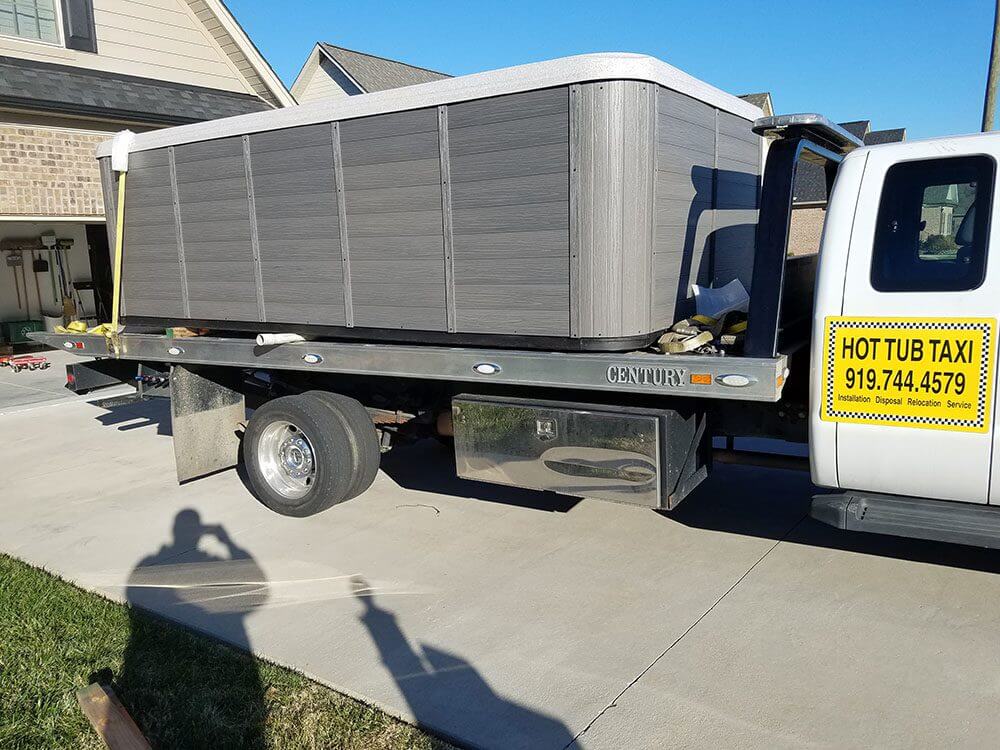
Before a tub is ever wrapped or strapped, it needs something solid and evenly distributed underneath it, not just the flat bed of a truck or trailer. Professional crews use padded cribbing or foam blocking positioned to mirror the tub’s actual support points, the same areas the factory base was designed to bear weight on, rather than resting the shell on whatever happens to be flat. This is the step that most DIY moves skip entirely, because it’s invisible in a finished photo; you can’t tell from a picture of a wrapped hot tub whether it’s sitting on proper support or just sitting on a truck bed.
Protecting Every Contact Point
Once the shell is properly supported, the next layer of protection is at the points where it could rub, scrape, or take an impact:
- Corner and edge padding at the cabinet corners and shell lip, the areas most likely to contact a doorframe, gate, or trailer wall during loading.
- Moving blankets wrapped around the full cabinet, secured so they can’t shift or slide during transit, since a blanket that bunches up mid-move stops protecting the surface it was covering.
- Cover protection, since the cover is both a barrier and a vulnerability; it needs to be secured tightly enough that it can’t lift or shift in transit, without cinching it down so hard that it presses unevenly on the shell’s rim.
The Plumbing Step That Gets Skipped
Draining a hot tub before a move sounds obvious, and it is, but doing it thoroughly is a different task than doing it quickly. Residual water sitting in internal plumbing lines, jets, and heater components adds unaccounted-for weight that shifts during transit, and in colder weather, it can freeze and crack fittings that were perfectly fine when the tub left the driveway. A proper pre-move drain typically involves clearing water from the pump lines and jets specifically, not just pulling the drain plug and waiting for the visible water to empty out. This is one of the more common reasons a tub that “moved fine” develops a slow leak weeks later, and it has nothing to do with how carefully the shell itself was handled.
Securing the Load Without Overdoing It
Strapping is where the flex problem from earlier in this article tends to show up again, in reverse. Straps that are too loose let the tub shift and bounce. Straps cinched too tight in the wrong spots can press unevenly on the shell and create the exact kind of localized stress that leads to cracking later. Commercial cargo securement standards from the Federal Motor Carrier Safety Administration exist for exactly this reason: heavy, irregularly shaped cargo needs to be secured in a way that distributes force evenly rather than concentrating it at a few strap points. A professional crew positions straps against the reinforced sections of the cabinet frame, not the shell itself, and checks tension at multiple points rather than just cinching until it feels tight.
Weather Is Part of the Protection Plan, Not an Afterthought
Temperature affects a hot tub move in both directions. In cold weather, any water left in the lines is a freeze risk, and acrylic shells can become slightly more brittle in low temperatures, which is one more reason the flex-related stress described above matters more in winter moves. In hot weather, extended sun exposure during a long-distance haul can affect an unprotected cover and, over enough hours, soften certain shell finishes. For local moves this is rarely a major factor, but for the multi-state hauls we regularly handle across the Carolinas, Virginia, Tennessee, Georgia, and Florida, it’s part of the planning conversation before the tub ever leaves the driveway.
Local Move Versus Long-Distance Haul
The core protection principles are identical whether a spa is going twenty feet across a backyard or four hundred miles down the interstate, but the margin for a small mistake to compound gets a lot smaller over distance. A minor flex point that wouldn’t matter over a short driveway move has hours to do damage over a long highway haul. If you’re trying to figure out which category your situation falls into, our guide on how to move a hot tub safely walks through the broader planning process, and our hot tub moving checklist covers what to have ready before a crew arrives.
The Bottom Line
Padding and straps are visible, so they get all the attention in most guides on this topic. The techniques that actually prevent damage, proper support underneath the shell, correctly positioned straps, and a fully cleared plumbing system, are the parts you can’t see in a photo of a wrapped hot tub. That’s usually the real difference between a move that goes smoothly and one that doesn’t show its damage until weeks later.
Since 1994, Hot Tub Taxi has moved hot tubs and swim spas across the Carolinas and into Virginia, Tennessee, Georgia, and Florida, and this is the level of detail our crews bring to every job, local or long-distance. If you’re planning a spa move and want it handled by people who do this daily, take a look at our hot tub moving services or call (919) 744-4579 for a free estimate.
Frequently Asked Questions
What’s the most common way hot tubs get damaged during a move?
More often than a single hard impact, it’s unsupported flexing: the shell riding without proper support underneath, or being strapped unevenly so pressure concentrates in one area. This kind of stress doesn’t always show up immediately and can lead to a leak weeks after the move.
Do moving companies drain the hot tub before transport?
Yes, and a thorough drain clears water from the pump lines and jets, not just the tub itself. Leftover water adds weight and, in cold weather, risks freezing and cracking fittings.
Can a hot tub be transported lying on its side?
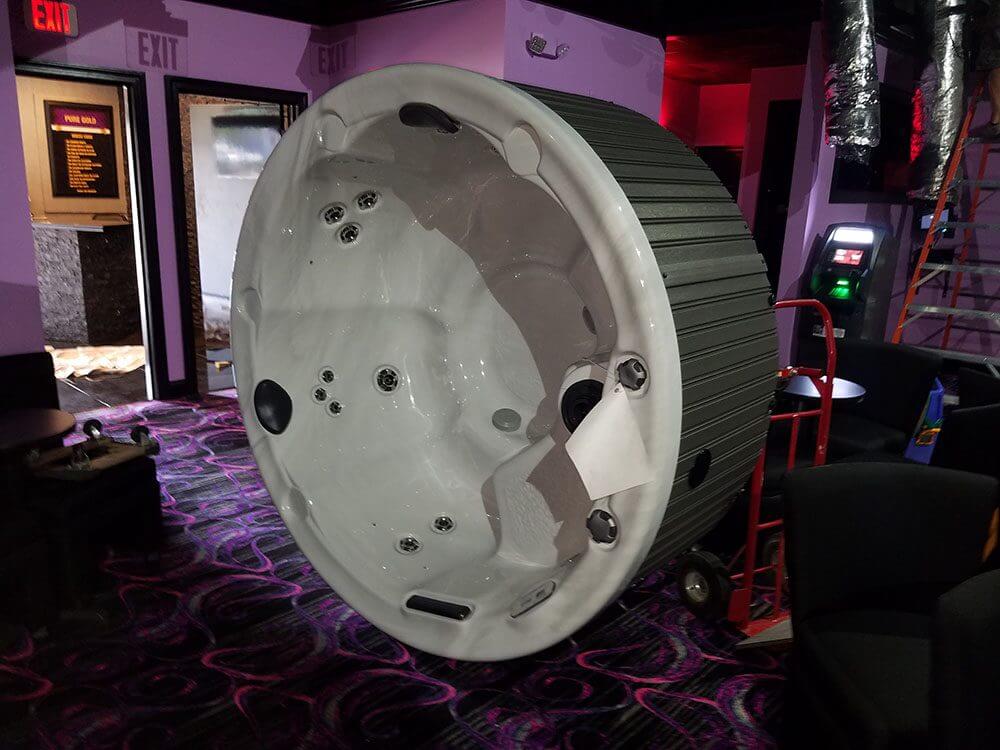
It’s generally avoided. Hot tub shells are designed to be supported the way they sit in normal use, and transporting one on its side or at a steep angle removes that support and increases the risk of the flexing damage described above.
How is a hot tub protected during a long-distance move?
The same core techniques apply: proper support underneath the shell, padding at contact points, secured straps positioned on the cabinet frame, and a completed drain. Longer moves add weather exposure and time as additional factors, since a minor issue has more hours to become a bigger one over a multi-state haul.