
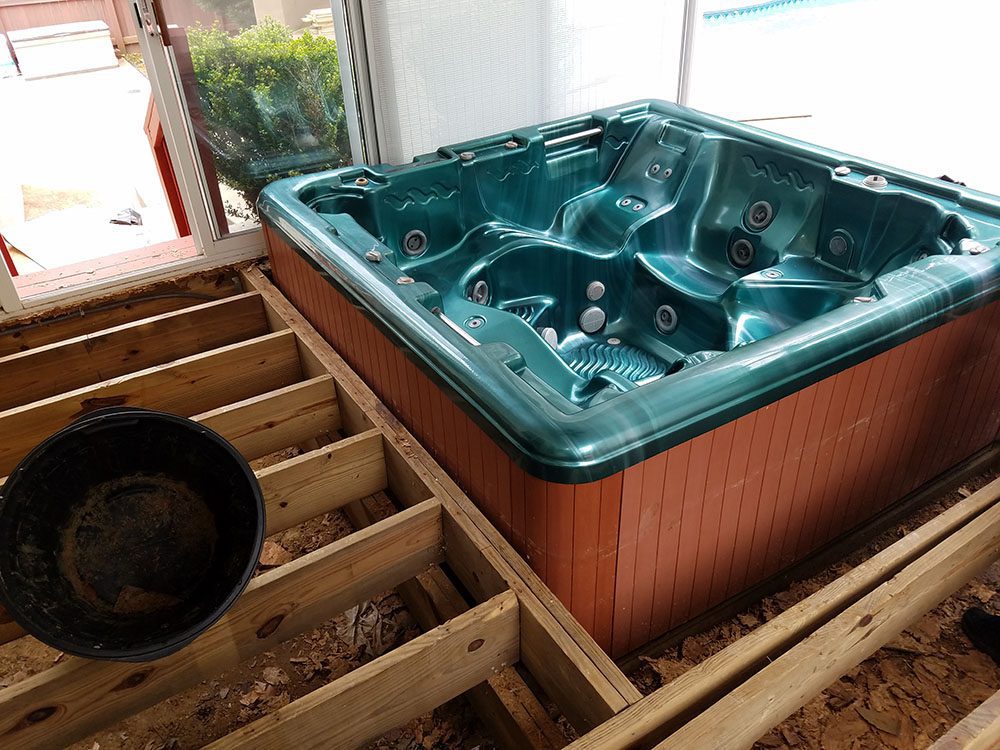
Draining a hot tub sounds like the easy part of a move: open a valve and wait. In practice, it is where move days are quietly won or lost. A tub that still has water in its lines, a hose that sends chemically treated water somewhere it should not go, or a drain started at 7 a.m. for a crew arriving at 9 can all turn a smooth job into a delayed one. The tub has to be empty, dry enough, and disconnected before anyone lifts it, and the timeline for getting there starts earlier than most people expect.
The short answer: shut off the power, let the water cool, drain the tub with a hose or a submersible pump, vacuum the footwell, clear the jets and plumbing lines, and let everything dry. Plan to start winding down the sanitizer about a week before the move, drain a day or two ahead, and send the water somewhere that is allowed to take it.
Why a Hot Tub Has to Be Drained Before It Moves
Most hot tubs hold several hundred gallons, and a gallon of water weighs a little over eight pounds. That means the water alone can weigh more than a ton, on top of a tub that is already heavy when empty. No crew can safely lift, tilt, or load a tub in that condition, and no truck should carry one.
The water you cannot see matters just as much. Water left in the jets and plumbing lines shifts when the tub is tilted, can leak into the cabinet and equipment bay, and can freeze and crack pipes if the move happens in cold weather. A tub that looks empty but isn’t fully drained is one of the most common reasons a move slows down.
Think of It Like Winterizing a Sprinkler System, Not Emptying a Bathtub
The easiest way to understand a proper drain is to compare it to blowing out a sprinkler system. The visible water, the part you can see in the footwell and seats, is the easy part. The hard part is the water that hides in the pipes. In a hot tub, water hides in three places:
- The footwell and other low points of the shell. The drain valve gets most of the water, but puddles settle in the lowest spots and around the seats.
- The jets and plumbing lines. Water sits in the pipes that connect the pumps to the jets, long after the shell looks dry.
- The equipment bay. Pumps, the heater, and their fittings hold water, and some tubs have drain plugs on the pumps for this reason.
Every step below is aimed at one of those three places.
The Timeline: When to Start
- About a week before the move: let the sanitizer fade. Chlorine and bromine in your water don’t belong in a creek, and the water needs time to be safe to release. Stop adding sanitizer and let the levels fall. We explain why in the section on where the water goes.
- One to two days before: drain and dry the tub. Draining the day before, not the morning of, gives the shell and equipment time to dry and leaves room if a drain runs slowly.
- Move day: do a final check. Confirm the power is still off, the cover, steps, and accessories are removed, and nothing is dripping.
Your moving crew will expect the tub to be drained when they arrive. A drained tub is on the day-before checklist in our guide to preparing your property for a hot tub move.
Step by Step: How to Drain a Hot Tub for a Move
- Turn off the power first. Shut off the breaker and the GFCI disconnect before you open the drain, so the pumps and heater cannot run while the tub empties. If the tub is hardwired or you are unsure how it is connected, have a licensed electrician disconnect it.
- Let hot water cool. Draining very hot water onto a lawn or through a hose is unpleasant at best and can damage plants. If you recently used the tub, give it time to cool.
- Remove the cover and filters. Take the cover off and store it separately, and pull the filters so they can be cleaned and dried.
- Connect a hose and open the drain valve. Attach a garden hose to the drain valve, run it downhill to your chosen drain spot, and open the valve. Letting gravity do the work can take an hour or two for a typical tub, depending on its size and how far the hose runs.
- Or use a submersible pump. A pump placed in the footwell is much faster. Turn it off as soon as the water is gone, because running it dry can damage the motor.
- Vacuum the footwell and low spots. Use a wet/dry shop vac to pull up the water that puddles in the footwell, seats, and filter compartment once the flow slows to a trickle.
- Clear the jets and plumbing lines. With the shop vac in blow mode, hold the hose against each jet for several seconds to push trapped water toward the drain, then switch to vacuum mode and pick up what comes out. If your tub has pump drain plugs, open them to let the water in the equipment bay run out. If you are not sure what you are looking at in the equipment bay, check your owner’s manual or ask a technician, and don’t loosen fittings you don’t recognize.
- Let it dry. Leave the tub open and wipe it down with towels. In cool or humid weather, give it extra time.
- Do a last check. Look under the cabinet panels and around the equipment bay for drips or standing water before you call it done.
If your move falls in cold weather, take the line-clearing step seriously. Water trapped in the plumbing can freeze and crack pipes, and repairs are a frustrating way to start life in a new location. Our guide on the best time to move a hot tub covers how the season affects the job.
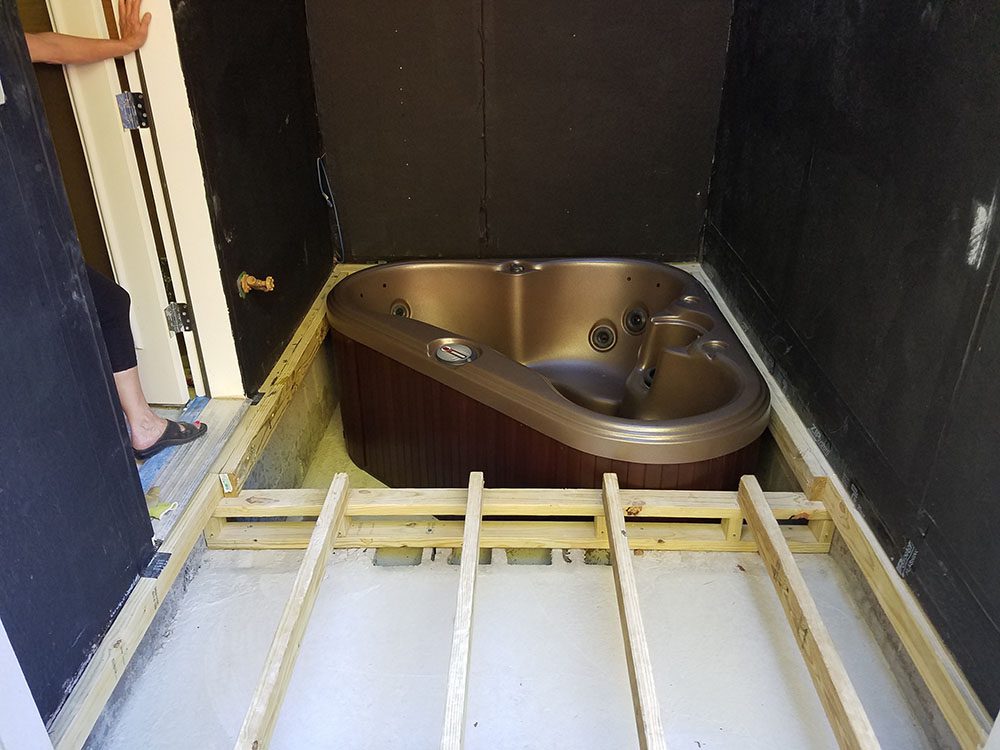
Where the Water Goes
This is the part most people only think about once the hose is running. Hot tub water contains sanitizer and other chemicals, and storm drains aren’t sewers. It leads to creeks and streams, usually without any treatment, and chlorine and similar chemicals can harm fish and other aquatic life. Many cities ask residents not to send chlorinated water into storm drains.
The City of Raleigh, for example, advises that homeowners wait at least 10 days after chlorinating before releasing water, release it slowly to a grassy area away from streams and storm drains, and, if there is no grass, dechlorinate and test the water first. Other cities and counties have their own rules, so check yours before you start.
A few practical points follow from that:
- Stop adding sanitizer early. That is why the timeline above starts a week or more before the move, and why testing the water before you drain is worth the minute it takes.
- Drain onto your own property, slowly. Aim the hose at a lawn or landscaped area that can soak up the water, not toward the street, a neighbor’s yard, or your foundation.
- Avoid your septic system. Draining a large volume of water into a septic system can overload it, and many local guides advise against it.
- If you cannot wait, ask a pool or spa supply store about a product that neutralizes sanitizer, and test the water before releasing it.
Mistakes That Make Move Day Harder
- Draining the same morning as the move, with no time to dry.
- Skipping the jets, lines, and equipment bay because the shell looks empty.
- Running a submersible pump after the water is gone.
- Sending treated water into the street or a storm drain.
- Leaving the cover, steps, or filters attached.
- Assuming the power is off without checking.
- Not telling the crew what you did, or about anything unusual, like a slow drain or a drip.
What to Tell Your Moving Crew
A short note when you confirm your appointment saves time on move day. Let the crew know when you drained the tub, whether you cleared the lines, whether you opened any drain plugs, and anything that didn’t go as expected. If you are not sure the tub is fully drained, say so, because it changes how the crew plans the tilt and the lift. Once the tub is empty, the move itself is the next job; our guide on how to move a hot tub safely picks up where this one stops.
Get the Tub Moved Once It Is Empty
Draining is the part you can control before move day. The rest is heavy, awkward work that goes better with the right equipment and a crew that has done it before. Hot Tub Taxi has been moving hot tubs since 1994, with offices in Raleigh and Charlotte and service across NC, SC, VA, TN, GA, and FL. Our hot tub moving service starts with a free estimate, so call (919) 744-4579 and tell us what shape the tub is in.
Frequently Asked Questions
How long does it take to drain a hot tub?
It depends on the tub’s size and how you drain it. Draining it through the drain valve by gravity often takes an hour or two, while a submersible pump can do the job much faster. Allow extra time to vacuum the footwell and clear the lines.
Do I have to drain a hot tub before moving it?
Yes. A full tub holds more than a ton of water, and water left in the lines can shift, leak, or freeze. The tub should be drained, the lines cleared, and the shell dry before the crew arrives.
Can I drain a hot tub the day before the move?
Yes, and it is usually the better choice. Draining a day or two ahead gives the shell and equipment time to dry and leaves time to deal with a slow drain or stubborn water in the lines.
How do I get the last of the water out of the jets and lines?
Use a wet/dry shop vac. In blow mode, it pushes trapped water out of the plumbing, and in vacuum mode, it picks up what collects in the footwell. If your tub has drain plugs on the pumps, open them as well, and follow your owner’s manual for your model.
Can I drain a hot tub into the street or a storm drain?
Many cities ask residents not to, because storm drains lead to creeks and streams and the water contains sanitizer. It is better to drain slowly onto your own lawn or landscaping after the sanitizer has faded. Check your city or county’s rules before you start.
What if I do not want to drain it myself?
Ask your mover what they handle and what they expect you to do before the crew arrives. If you would rather not handle the draining, line clearing, and heavy lifting, a professional crew can take care of the move itself, and it helps to confirm the details when you schedule.