

Every article on this topic gives you the same list: sell it privately, donate it, call a junk removal company, scrap it for parts, or break it down yourself. All of those options exist, and most of them are presented as roughly equivalent choices to weigh based on your situation.
After more than 25 years of moving, removing, and rehoming hot tubs across the Carolinas and the Southeast, the team at Hot Tub Taxi thinks about this differently. There isn’t really a list of five equal options. There are two situations that lead to two different paths. Knowing which situation you’re in simplifies the whole decision.
The Question Nobody Asks First (But Should)
Does the tub still work?
That single question determines which path makes sense for you. The answer doesn’t have to be “runs perfectly.” It just means: does it heat, does the pump function, and is the shell structurally intact, with no major cracks? If yes, you have a used spa with genuine market value, and disposing of it through a junk hauler means leaving real money on the table. If not, you have a bulky, heavy item that needs to be removed from your property efficiently, and the question becomes how to get it done without injuring anyone or damaging your deck or yard.
Most disposal guides skip this triage entirely and treat a dead spa the same as a working one. They’re not the same situation, and they don’t lead to the same best answer.
Path One: The Tub Still Works
A functioning hot tub, even an older one, has a secondary market. Buyers looking for a used spa rather than a new one are actively searching, and they’re often willing to pay several hundred to several thousand dollars for a unit that heats reliably and doesn’t have shell damage. The challenge is that moving a hot tub to a buyer requires proper equipment, which is exactly why private-party hot tub sales often stall: the seller can list it, the buyer can find it, but neither party can easily arrange the actual physical transfer.
Consignment is the option that solves this problem and that almost no generic disposal article mentions. Hot Tub Taxi offers a consignment program for owners who have purchased a new spa and don’t know what to do with the working unit being replaced. Rather than donating it (no compensation), listing it privately (complicated logistics), or calling a junk hauler (paying to remove something that has value), consignment allows the spa to be matched with a buyer and relocated without the owner managing any of the physical side of the transaction. If you’ve got a working tub you want gone, a conversation about consignment is worth having before you default to a disposal call.
Learn more about available options for working tubs on our spa packages and consignment page.
Path Two: The Tub Doesn’t Work (Or Isn’t Worth Moving)
If the tub is dead, structurally compromised, or simply old enough that it has no realistic secondary market value, disposal is the right call. Here’s what that actually involves and where the process tends to get complicated.
The weight problem. An empty hot tub weighs between 500 and 1,000 pounds, depending on size and shell material. It has no good handholds, an awkward footprint, and a rigid shell that can crack if pressure is applied incorrectly during removal. A standard junk removal crew may be able to haul one away in straightforward conditions. For tubs on elevated decks, in enclosed spaces, recessed into patios, or in backyards without usable gate access, the removal job requires equipment and experience that a general junk hauler may not have.
The access problem. The same limited-access situations that make hot tub installation difficult make removal difficult. A tub that was craned into a walled backyard when the house was built doesn’t fit through a 36-inch gate now any more than it did then. Removal in those situations requires either disassembly of the tub (which is a real option for disposal but adds time and labor) or a crane lift over whatever obstacle is blocking the path. This is routine work for a specialist; it’s an unexpected complication for a general hauler who quoted the job without fully assessing the site.
The disposal destination. Hot tubs are largely non-recyclable in the conventional sense. The acrylic shell, foam insulation, PVC plumbing, and wood or composite cabinet don’t sort cleanly into standard recycling streams. Some components can be separated and handled appropriately; the bulk of most tubs ends up in a landfill. A responsible disposal service handles the transport and disposal, so the owner doesn’t have to arrange it.
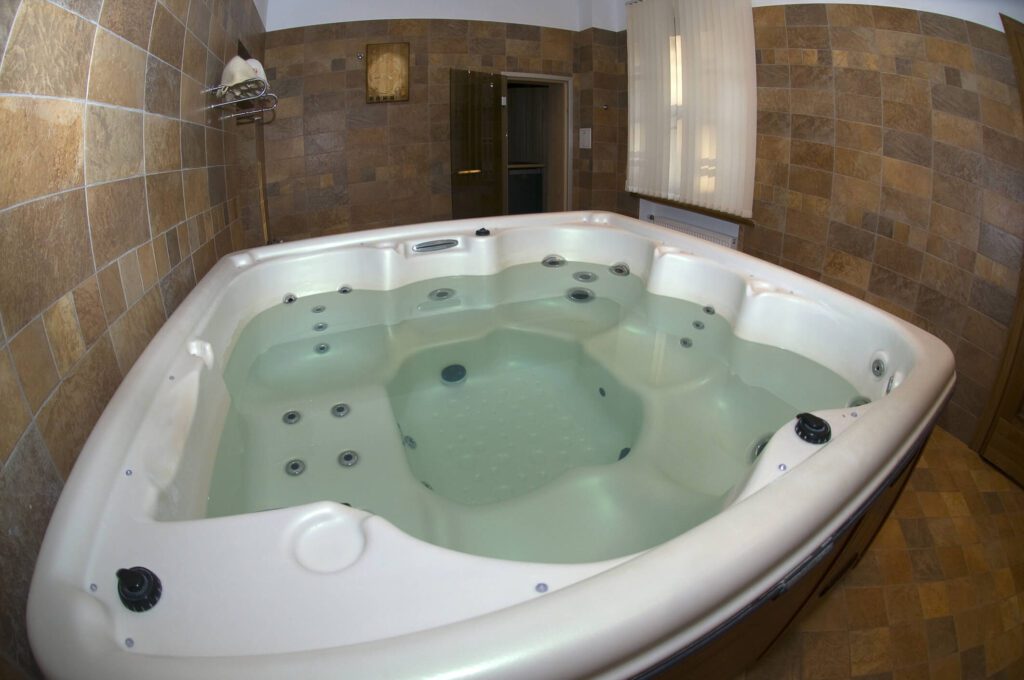
What DIY Demolition Actually Involves
Breaking down a hot tub yourself is a real option, and it’s sometimes the most practical path for someone with the right tools and no time pressure. The short version of what it involves: a reciprocating saw, or circular saw, to cut through the shell in sections, an angle grinder or bolt cutters for any metal framing, and a plan for disposing of the resulting pile of cut materials, which still has to be hauled somewhere.
The honest assessment is that DIY demolition is more work than most people expect when they first consider it, takes a full day for a tub of any real size, and generates a significant amount of debris that needs to go somewhere. For anyone who values their weekend, has a tub in a difficult location, or is working on a deadline (a home sale, a renovation, a new tub arriving Tuesday), a professional removal service is worth the cost.
If you’re specifically trying to understand how to get a tub out yourself because of the access challenge, our post on how to move a hot tub safely walks through the equipment and process in detail, including the points where a DIY approach becomes genuinely risky.
What to Expect from a Professional Hot Tub Removal
A professional removal service handles the complete process: draining whatever water remains in the tub and plumbing lines, disconnecting and capping the electrical hookup (or coordinating with a licensed electrician if required), removing the tub from its current position, including any crane or rigging work the access situation requires, and hauling it away from the property. The owner’s job is to make sure the path is clear and available for the appointment.
Cost varies based on tub size, access difficulty, and distance to the disposal facility. The cleaner the access and the simpler the site, the lower the cost. The variables that drive cost up are elevated decks, enclosed or recessed installations, limited gate access, and long haul distances.
If you’re ready to get a working estimate for your specific tub and location, Hot Tub Taxi’s removal and disposal services page covers what’s included, and you can reach us directly at (919) 744-4579 for a free quote or book an appointment online.
Frequently Asked Questions: Getting Rid of an Old Hot Tub
How much does hot tub removal typically cost?
Cost depends on the tub’s size, where it’s located on the property, how accessible it is, and how far it needs to be hauled. Simple, ground-level removals with good access cost less than elevated deck removals or enclosed installations that require crane work or disassembly. Getting a site-specific quote is the only reliable way to know what your removal will cost.
Can I break down a hot tub myself to avoid removal costs?
Yes, though it’s more work than most people expect. A reciprocating saw handles most of the shell cutting; a full-size tub typically takes several hours of sustained work to reduce to hauling-sized pieces. You’ll still need a plan for disposing of the debris, which may mean renting a dumpster or making multiple trips to a transfer station. For anyone on a tight timeline or without the tools, professional removal is usually the better trade-off.
Can a working hot tub be donated?
Some charitable organizations accept working hot tubs, but it’s less common than people expect, primarily because the logistics of moving a hot tub are significant enough that most organizations can’t handle them. Habitat for Humanity ReStores occasionally accept working spas, but call ahead before assuming one will take yours. For working tubs, consignment or private sale typically delivers a better outcome than attempting to donate.
What happens to a hot tub after it’s removed?
Most removed hot tubs end up at a landfill or transfer station. The materials involved, acrylic shell, foam insulation, PVC plumbing, composite or wood cabinet, don’t sort cleanly into standard recycling streams. Some metal components can be separated and recycled. A professional removal service handles transport to the appropriate disposal facility.
Is it worth selling an old hot tub rather than disposing of it?
If the tub heats and the pump functions, it likely has secondary market value. How much depends on age, brand, size, and condition. Consignment with a specialist who can match it with a buyer and handle the physical transfer is often the most practical path to recovering some value, particularly compared to the alternative of paying for disposal of something that works.