
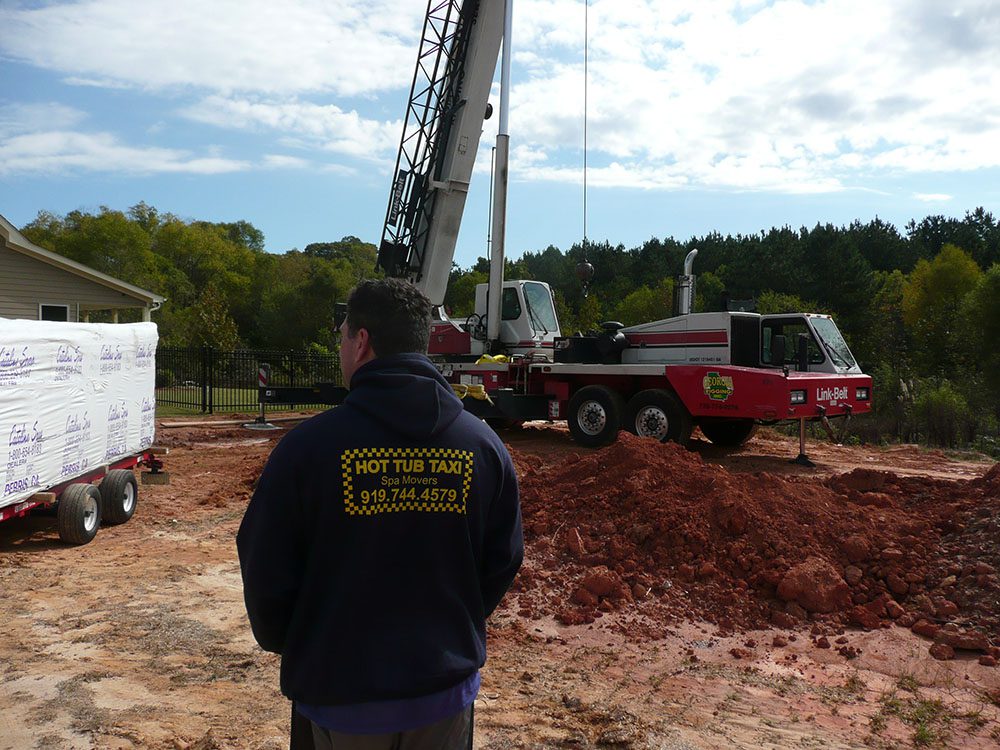
When a hot tub moves across town, the story is mostly about one yard. When it moves to another city or state, the story becomes two yards, one truck, and a calendar that has to line up on both ends. The drive itself is rarely where the trouble starts. An unprepared pad, an electrician who hasn’t been booked, a gate narrower than anyone measured, or closing dates that don’t match can turn a long-distance move into a stressful one.
The short answer: a long-distance hot tub move works best when you plan it as three legs: the send-off at your current home, the ride, and the landing at the new one. Drain, disconnect, and document the tub before pickup; have a crew that does this for a living secure and transport it; and set it on a level, ready base with power waiting when it arrives. Most of your effort goes into the two ends, not the road.
A Long-Distance Move Is Two Local Moves Joined by a Drive
It helps to stop thinking of a long-distance move as one big job and start thinking of it as two ordinary moves with a drive in the middle. At the first address, a crew has to get the tub out of the yard. At the second, a crew has to get it in and set it down exactly where you want it. Everything that makes a local move easy or hard, including gates, steps, decks, slopes, and the ground underneath, applies twice.
That is the useful way to plan, because the road is the part your mover controls best. The ends are where your preparation matters most. Hot Tub Taxi handles local and long-distance spa moves across North Carolina, South Carolina, Virginia, Tennessee, Georgia, and Florida, and the same pattern holds on every route: the moves that go smoothly are the ones where both addresses were ready.
What Changes When the Move Is Long-Distance
- Scheduling gets more complicated. Instead of one appointment at one address, you are coordinating a pickup, a delivery, and the time between them.
- The tub spends more time in transit. More hours on the road means more time for a small problem to grow, which is why proper support and securing matter more. Our guide on how professional movers protect a spa during transport explains how that works.
- Weather matters at both ends and in between. Cold, heat, and rain affect the drain, the ride, and the setup. See when to move a hot tub for how the season shapes the job.
- You are managing two sets of access conditions. The gate and path at the new home may be nothing like the ones at the old one.
- Pricing follows the job. Rates generally depend on the size of the spa, the distance traveled, and the crew needed, so a long-distance quote reflects drive time as well as the lift.
Leg One: The Send-Off
The send-off is everything that happens at your current home before the tub leaves. Done well, it means the crew arrives to a tub that is ready to go.
- Get an estimate with photos and measurements. Send pictures of the tub and its route out of the yard, plus gate widths, step counts, and anything overhead or uneven. Do the same for the destination so the quote covers both ends.
- Prepare the tub. It must be powered down, drained, and have its lines cleared, with the cover, steps, and accessories removed. Our guide on preparing your property for a hot tub move has the checklist.
- Arrange the electrical disconnect. If the tub is hardwired, a qualified electrician should disconnect it before the crew arrives.
- Document the condition. Take photos or a short video of the shell, cabinet, cover, and equipment bay before anything moves. It gives you and your mover a shared record.
- Decide what travels with the tub. Cover, steps, filters, and accessories should be gathered and labeled so they arrive with it.
Leg Two: The Ride
On the road, most of the work is already done. The crew has the tub supported, padded, and strapped for the trip, and your job is mainly to stay reachable and flexible. Weather, traffic, and delivery logistics can move a schedule by a few hours, so a pickup and delivery window is more realistic than a single exact time on a long haul.
This is also the right time to confirm the details of the delivery: who will be at the new home, how to reach the crew, and what happens if a storm or road closure delays the arrival.
Leg Three: The Landing
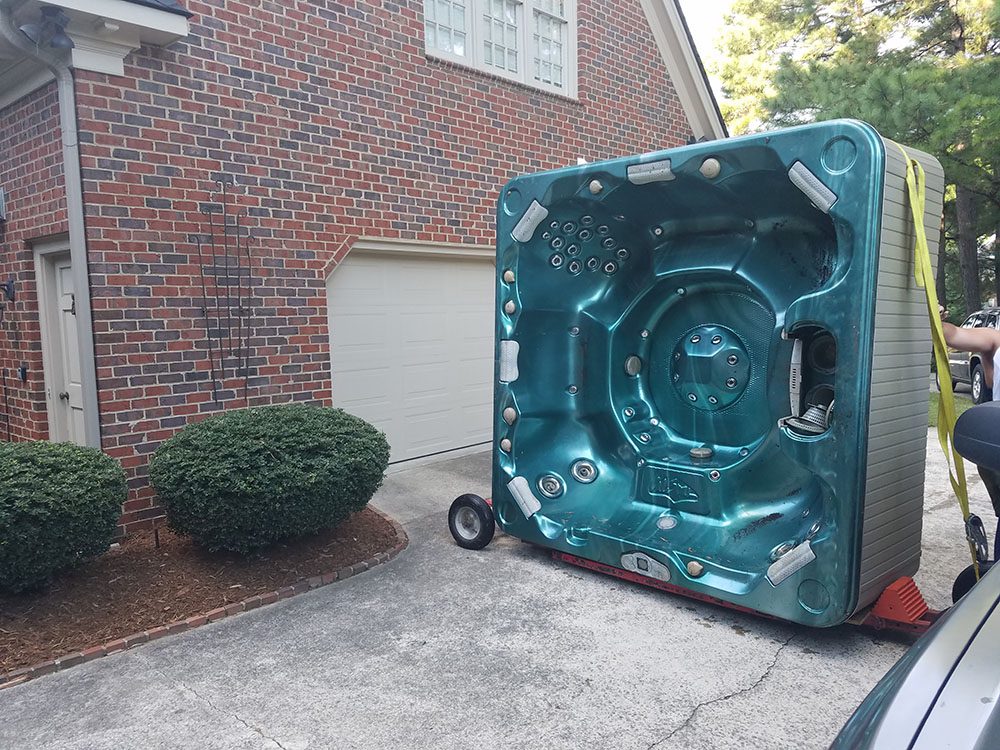
The landing is where most long-distance moves succeed or stall. The tub arrives, and everything it needs should already be in place.
- A level, solid base. The tub should have a prepared pad or surface that can support a full, heavy tub. If you need deck work, we can point you to builders through our deck construction referrals.
- Electrical ready. Book a qualified electrician for the new home before moving day so power is available when the tub is set. We offer electrical referrals if you need one.
- A clear path. Gates, steps, and the route from the truck to the pad should be open and measured. If access is limited, ask whether a crane is needed.
- Someone on site. Be there, or have someone there, to confirm exactly where the tub should sit.
- Start-up after setup. Do not fill and power up until the tub is in place and the electrician has finished. Our guide on what to do after moving a hot tub walks through the first fill and start-up.
When Your Closing Dates Do Not Line Up
The most common long-distance complication has nothing to do with the tub: the dates do not match. You may have to leave your old home before the new one is ready, or the new home may be ready before you close on the old one. Tell your mover your timeline as early as possible so you can plan around the gap, and decide ahead of time how you want to handle it. If the timing or cost doesn’t make sense, it may be worth asking whether leaving the tub behind or taking it with you is the better call. We also offer hot tub consignment if you decide to sell.
Questions to Ask a Mover Before You Book
- How are pickup and delivery windows handled?
- What does the estimate include: disconnecting, draining, loading, delivery, and placement at the new home?
- Are you licensed and insured, and what does that coverage apply to during transport?
- How is the tub supported and secured for a long drive?
- What happens if the weather or the route delays the move?
- What do I need to have ready at each address?
A mover who answers these clearly is telling you how the move will actually go.
Plan the Move Around Both Ends
If you are moving a hot tub or swim spa to another town or another state and want the plan built around both addresses, Hot Tub Taxi has been moving spas since 1994, with offices in Raleigh and Charlotte. We are licensed and insured, and our hot tub moving service starts with a free estimate. Call (919) 744-4579 and have photos and measurements of both locations ready.
Frequently Asked Questions
Can a hot tub be moved across state lines?
Yes. A professional crew with the right equipment can transport a hot tub or swim spa well beyond the local area, including into neighboring states. The key is preparing both ends and using a mover who plans the trip, not just the lift.
How far will a hot tub mover go?
It varies by company. Hot Tub Taxi provides spa transportation services throughout North Carolina, South Carolina, Virginia, Tennessee, Georgia, and Florida. If you are moving somewhere else, call and ask, because the answer depends on the route and the schedule.
How long does a long-distance hot tub move take?
It depends on the distance, the route, and the schedule. The drive is often the shortest part of the process. Preparation at the first address and setup at the second usually take more time, which is why pickup and delivery windows are common.
Do I need to drain the hot tub for a long-distance move?
Yes. Drain the tub, clear the lines, and dry the shell before loading. Water left in the plumbing adds weight, can leak in transit, and can freeze in cold weather.
Can I move a hot tub long-distance in winter?
It can be done, but cold weather raises the stakes, mainly because water left in the lines can freeze and crack fittings. Thorough draining and good timing matter more, so tell your mover your dates and the weather at both ends.
Who is responsible if the hot tub is damaged during transport?
It depends on the mover and the coverage they carry. Ask before you book what the mover’s insurance covers during transit, and get it confirmed in writing. Document the tub’s condition with photos before it leaves to help if there is ever a question.
Do I need to be there at both ends?
Plan on having someone present at pickup and delivery. Confirm what travels with the tub, and approve exactly where it will be placed at the new home.