

Most articles on this topic answer a different question than the one people actually ask. They explain how to move a hot tub, straps, dollies, clearing a path, and skip right past whether the tub in question is actually in shape to survive that process. Those are two different questions. With the right equipment, almost any hot tub can be physically lifted and loaded. Whether it arrives at the other end in one piece, and whether the move is safe for the people doing it, depends on the condition of the tub itself, and that’s the part worth checking first.
The Short Answer
A hot tub is generally safe to move if its shell has no cracks or stress fractures, its cabinet and support frame show no soft spots or water damage, it has no history of unresolved leaks, and it hasn’t been sitting fully settled in one spot for many years without ever being disturbed. If any of those are in question, the tub can usually still be physically moved, but “can be moved” and “safe to move without damage” aren’t the same thing, and that distinction matters more than most people realize until it’s too late to matter.
Why “Can It Be Moved” and “Is It Safe to Move” Are Different Questions
A hot tub shell is engineered to hold its shape under one specific condition: sitting flat, fully supported, usually filled with water that helps distribute weight evenly. Pull it off that base and every weakness that’s been sitting dormant for years, a hairline crack, a soft spot in the frame, a section of foam insulation that’s absorbed water, suddenly matters in a way it never did while the tub just sat there being used. A tub can run perfectly fine in place for a decade with a problem that only becomes obvious the moment it’s lifted, tilted, or set down somewhere new. That’s the real question behind “is it safe to move,” and it has almost nothing to do with the equipment used to move it.
Signs Your Hot Tub Might Not Handle a Move Well
A few things are worth checking before committing to a relocation, whether you’re doing it yourself or hiring it out:
- Cracks or stress marks in the shell, even small ones. A hairline crack that’s never been a problem in place can spread quickly once the shell is flexed during loading or transport.
- Soft or spongy spots in the cabinet or frame. This usually indicates water intrusion and wood rot in the support structure, which can mean the frame isn’t providing the even support the shell needs during a move, even if it looks fine sitting still.
- A history of leaks that were patched rather than properly repaired. A patch that’s held up under normal, stationary use isn’t necessarily built to hold under the stress of being lifted and transported.
- Significant age combined with no recent inspection. A tub well past 10 to 15 years old that hasn’t been looked at by a technician in years is a reasonable candidate for an inspection before, not during, a move.
- A tub that’s never been moved since installation, especially an older one. Years of sitting in exactly one position can mean the shell and support structure have settled into that specific spot in ways that aren’t obvious until they’re disturbed.
The Structural Question Most Guides Never Explain
We’ve written before about why hot tub shells actually fail during a move, and it’s rarely a single hard impact. It’s unsupported flexing, the shell twisting slightly, repeatedly, once it’s off the base it was designed to sit on. A tub that’s been fully supported and undisturbed for years is, in a sense, more vulnerable to this than one that’s been moved once or twice before, simply because nothing has tested whether its current condition can actually handle that stress. That’s why a visual inspection before the move matters as much as the equipment used during it; you’re not just checking whether the tub looks fine sitting still, you’re trying to anticipate whether it’ll hold up once that support is removed. We go into more detail on how professional movers actually protect against this in our guide on how professional movers protect a spa during transport.
The Human Safety Side
Condition assessment isn’t only about protecting the tub. An empty hot tub still weighs several hundred pounds, has an awkward shape that’s hard to grip safely, and involves electrical connections that must be properly disconnected before lifting. Moving it without the right equipment or knowledge of how to disconnect electrical components safely creates a real injury risk, regardless of the tub’s condition. This is one area where the case for professional help is less about convenience and more about basic safety, consistent with general guidance from organizations like OSHA on safely handling heavy, awkward loads.
When “Not Safe to Move” Really Means “Not Worth Moving”
Sometimes an honest inspection turns up something more significant than a single fixable issue, multiple soft spots, a genuine shell crack, or a combination of age and deferred maintenance that adds up to real risk either way. In that case, the more useful question isn’t how to move the tub safely, it’s whether moving it is the right call at all. We’ve covered how to think through that decision in our guide on signs it’s time to dispose of your hot tub, which is worth a look if an inspection raises more questions than it answers.
How a Professional Assessment Actually Works
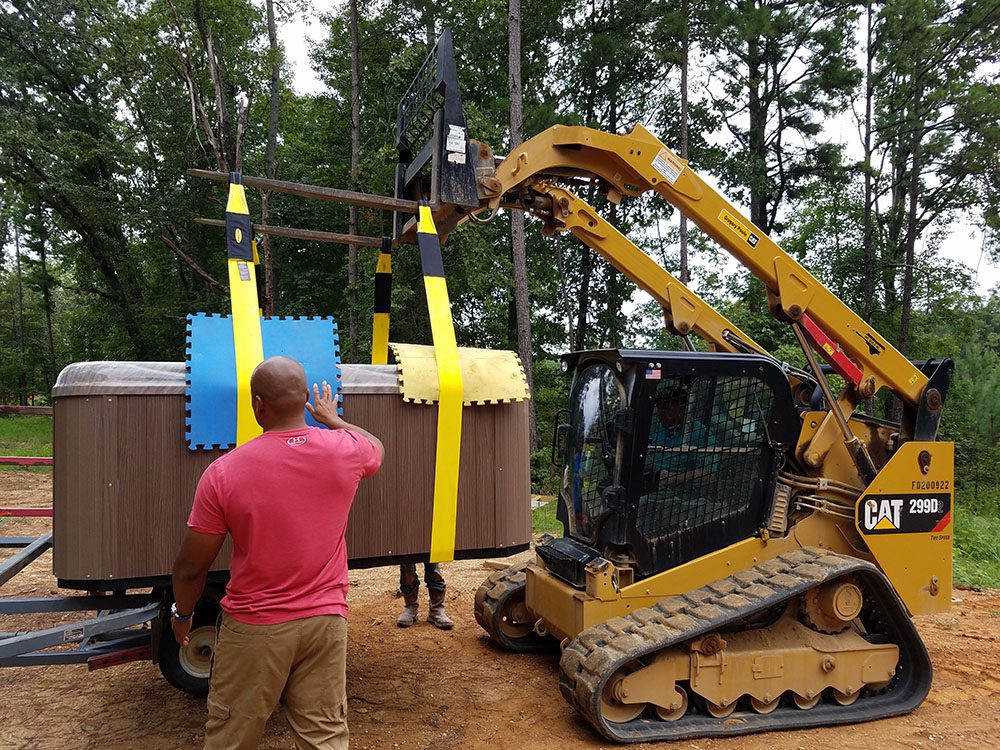
Before we move a hot tub, a real assessment isn’t a glance from the driveway. It involves checking the shell for cracks or stress points, inspecting the cabinet and frame for soft spots or water damage, reviewing what’s known about the tub’s repair history, and confirming the plumbing has no active leaks that could complicate draining and transport. If everything checks out, the move proceeds using the proper support and protection techniques for that specific tub. If something concerning turns up, that’s a conversation worth having before moving day, not during it.
The Bottom Line
Whether a hot tub can be moved and whether it’s actually safe to move are two different questions, and most advice online only answers the first one. A real assessment, checking the shell, the frame, the repair history, and the tub’s age, tells you far more than any amount of careful lifting technique can make up for on a tub that genuinely wasn’t ready for the trip.
Since 1994, Hot Tub Taxi has assessed and moved hot tubs across the Carolinas, Virginia, Tennessee, Georgia, and Florida, and we won’t move a tub without checking it first. If you’re planning a relocation and want an honest read on whether your spa is ready for it, take a look at our hot tub moving services or call (919) 744-4579 to schedule an assessment. Once you know your tub is ready, our guide on how to move a hot tub safely covers what the process itself involves.
Frequently Asked Questions
Can a hot tub with a small crack still be moved?
Sometimes, but it depends on the crack’s location and depth. A minor surface blemish is different from a structural crack that could worsen under the stress of lifting and transport. This is exactly the kind of thing worth having assessed rather than guessed at.
How do I check for soft spots in my hot tub’s cabinet?
Gently press on different sections of the cabinet, particularly lower panels and areas near the base. Give or sponginess generally indicates water damage to the underlying frame, which can affect how well the structure supports the shell during a move.
Is it safe to move a hot tub that’s never been moved before?
Often, yes, but it’s worth a closer look before assuming so, particularly on an older tub. Years of sitting in one position can mean underlying weaknesses have never been tested the way a move will.
Should I get my hot tub inspected before a move even if it seems fine?
If it’s an older tub, has a history of leaks, or hasn’t been professionally looked at in several years, yes. A quick assessment before moving day is far less costly than discovering a problem halfway through a move.