
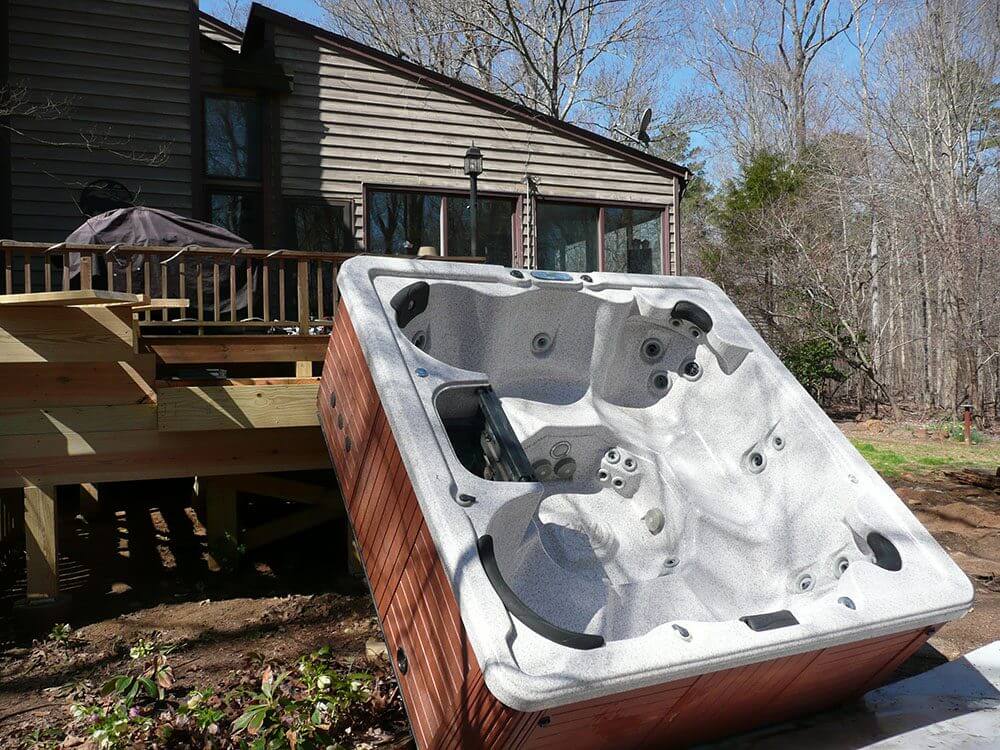
If you are planning to move a hot tub, one of the first questions on your mind is what it will cost. The honest answer is that it depends, and the reason is simple: the price of a move is set less by the tub than by the job. Where the tub sits now, what stands between it and the truck, and where it is going all change how much time, equipment, and manpower the move takes.
The easiest way to understand a hot tub moving quote is to treat the job like a piano move, not a couch move. Nobody prices a piano by the mile; they price it by the stairs, the doorways, and the turns between the keyboard and the truck. A hot tub works the same way. Once you know what a mover is actually pricing, you can predict your quote with reasonable accuracy, spot the one that left something out, and cut cost where cutting is safe.
The short answer: the biggest driver of cost is the route between the tub and the truck at both ends, followed by the equipment that route requires, the distance, the size and condition of the tub, and whatever extras are bundled in. The honest answer to “how much” is that it depends, because a short move on flat ground and a crane job across state lines are not the same job. Only a quote based on your actual access gives you a real number, and a free estimate is the fastest way to get one.
Why Every Hot Tub Moving Quote Looks Different
A hot tub mover is pricing four things: the crew’s time, the equipment the job needs, the travel involved, and the risk of damaging a heavy, expensive object. Two identical tubs can land at very different prices because the first three of those depend entirely on the property, not the tub.
Cost guides online show very wide ranges for moving a hot tub, and the width of those ranges is the useful part. It tells you that the price is mostly about the job, and the job is mostly about access. Local labor rates and the conditions at your home move the number in either direction, so treat any national figure as a rough frame, never as a quote.
The Five Things That Actually Set the Price
1. The Route Between the Tub and the Truck
This is the factor that quietly decides most quotes. Picture the path from where the tub sits to where the truck can park, then the same path at the destination. Every gate, step, slope, soft patch of lawn, low branch, and tight corner is a place where the crew slows down or the equipment changes. The route matters more than the mileage, because a tub that rolls across a flat patio is a different job than one that has to squeeze through a side gate with inches to spare.
If you are not sure whether your tub will clear your gate, read what happens if a hot tub won’t fit through a gate before you ask for quotes. If the tub is on a raised deck, moving a hot tub from a deck covers what that adds to the job.
2. The Equipment the Route Demands
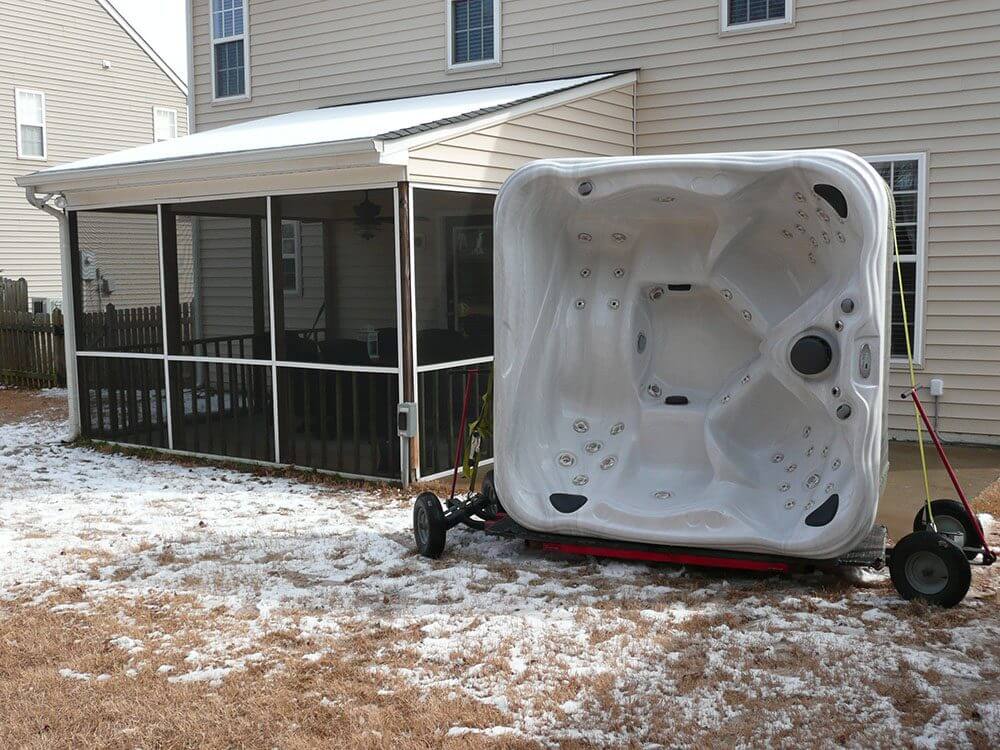
Most moves use a combination of spa dollies, sleds, ramps, and straps with a trained crew. Some routes cannot be solved on the ground at all and need a crane. For perspective on why crew size and equipment matter, the lifting guidance from the National Institute for Occupational Safety and Health (see NIOSH’s lifting equation manual) starts from a recommended maximum of about 51 pounds under ideal conditions, and a hot tub weighs several hundred pounds even when it is empty. What you are paying for is not strength; it is the equipment and the people who know how to use it.
A crane is a line item of its own, with its own setup, scheduling, and space requirements. We cover when one is needed and what it adds in our guide to crane-lift hot tub delivery and cost.
3. Distance, and the Time It Takes to Cover It
Distance matters, but time matters more than miles. A 15-mile trip across town through traffic can take longer than a 40-mile highway run, and loading and unloading time counts either way. Long-distance moves, including those that cross state lines into South Carolina, Virginia, Tennessee, Georgia, or Florida, generally cost more because they commit a truck and driver to the job for longer.
4. The Tub Itself: Size, Type, and Condition
Larger and heavier tubs need more hands and more care, and the shell material and cabinet construction affect how a tub can be lifted and strapped. Condition matters too. A tub with a cracked shell, a rotted cabinet, or leaking plumbing may need extra handling, or may not be worth moving at all. Our guide on how to know if your hot tub is safe to move explains what to look for before you book anyone.
5. What Is Bundled In, and What Is Not
Two quotes that look different may not be quoting the same job. Some include disconnecting and draining the tub, handling the cover and steps, and setting it on the new pad; others price those separately. Electrical work is the biggest one to clarify. The wiring should be disconnected and reconnected by a qualified electrician, and that may or may not be part of the moving quote. Removal of an old tub and repairs are also commonly separate.
Three Moves, Three Price Stories
These are illustrations to show how the factors combine, not price quotes.
The Backyard Shuffle
A tub on a flat patio moves thirty feet to a new pad on the same lot. The price is mostly crew time on a short route with simple equipment. What pushes it up: a step or a soft section of lawn that nobody mentioned, or a new pad that is not level or ready when the crew arrives.
Across Town, Deck to Deck
A tub on a raised deck moves to a new house twenty minutes away. The price reflects extra hands to bring it down safely, a truck and drive time, and a second route at the destination. What pushes it up: a side gate tighter than it looks, steps in the new yard, or electrical that is not ready, which can mean a second trip.
Crane Day
A tub sits in a fenced backyard with no clear side access, or on a second-story deck. The price includes crane setup and scheduling, a larger crew, and a plan for where the crane can sit. What pushes it up: overhead power lines, limited street access, or weather that forces a reschedule.
How to Read a Hot Tub Moving Quote
A useful quote tells you what job it is pricing. When you compare quotes, check for these:
- Both ends: does the price cover pickup and setup at the new location?
- What is included: disconnecting and draining, the cover and steps, placement on the pad.
- Equipment and crew: whether a crane or special equipment is part of the plan.
- Ask what happens if the route is harder than described. A good mover will tell you how that is handled before the crew arrives.
- Protection: how the shell and cabinet are protected, and what happens if something is damaged.
A very low phone quote that never asked about your gate, your steps, or your deck is not a bargain; it is a quote for a different job.
How to Lower the Cost Without Cutting Corners
- Send photos and measurements before you ask for a price: gate width, number of steps, the distance to the truck, and the ground between. Accurate details produce accurate quotes and fewer surprises on moving day.
- Clear the route of furniture, planters, loose pavers, and anything else in the way, and make sure the new pad is level and ready. Our guide to preparing your property for a hot tub move has the full checklist.
- Schedule the electrician to disconnect and reconnect on the right days, so the crew is not waiting.
- Be flexible on timing if you can; a mover with an open day may be easier to schedule.
Moving it yourself rarely saves what people expect. Rented equipment, a truck, and helpers add up quickly, and a cracked shell or damaged plumbing can cost more than the move itself. We go through the specifics in the hidden risks of DIY hot tub moving.
When Moving Costs More Than It Is Worth
The move costs the same whether the tub is new or tired. If your tub is older, has repeated repairs, or a shell that is starting to fail, add up the move, the electrical work, a new pad, and a replacement cover, then compare that total to the cost of replacing it. Our post on whether to take your hot tub when you move walks through that decision. And if you just bought a used tub, what to check before buying and moving a used hot tub can keep you from paying to move a problem.
Get a Quote Built Around Your Route
If you are planning a move and want a price based on your actual access, not a national average, Hot Tub Taxi has been moving hot tubs since 1994, with offices in Raleigh and Charlotte and service across NC, SC, VA, TN, GA, and FL. Our hot tub moving service starts with a free estimate, so call (919) 744-4579 and have photos of your tub and the route ready.
Frequently Asked Questions
How much does it cost to move a hot tub?
It depends. Your price is set by your route, the equipment the job needs, the distance, the size and condition of the tub, and what the quote includes. A short move on flat ground costs far less than a long-distance or crane job, so the only reliable number is a quote based on your property. Hot Tub Taxi offers free estimates, so you can get one without any obligation.
Why do hot tub movers charge more for stairs, decks, or tight gates?
Because those conditions change the job. They require more hands, slower handling, and sometimes different equipment, and they raise the risk of damage to the tub and your property.
Is it cheaper to move a hot tub myself?
Sometimes on paper, but rarely in practice. Equipment rental, a truck, and helpers add up, and a damaged shell or plumbing can erase the savings in one mistake.
Do I need a crane to move my hot tub?
Only if the route cannot be handled on the ground, such as a second-story deck or a yard with no workable side access. A mover can usually tell from photos and measurements.
Does distance matter more than the route?
Usually the route matters more for local moves, because access determines crew size and equipment. Distance becomes the larger factor on long-distance moves, where drive time and a dedicated truck add up.
How can I get an accurate hot tub moving quote?
Send photos of the tub and both routes, measure gates and steps, note anything overhead or uneven, and ask what is included. The more accurate the details, the closer the quote is to the final price.